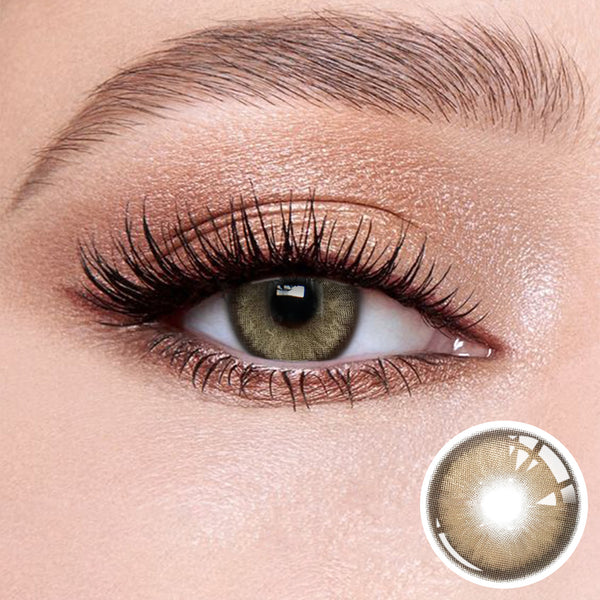
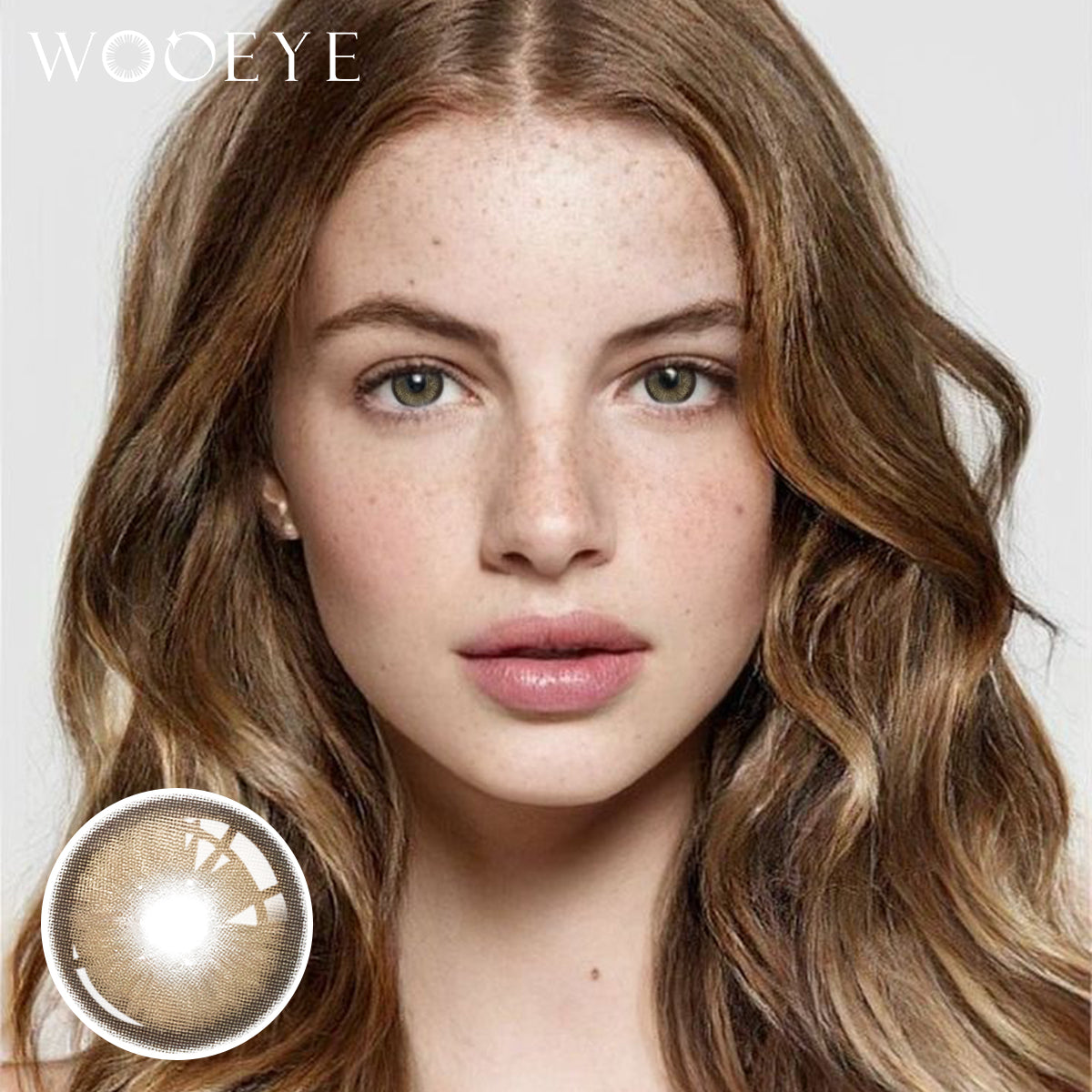
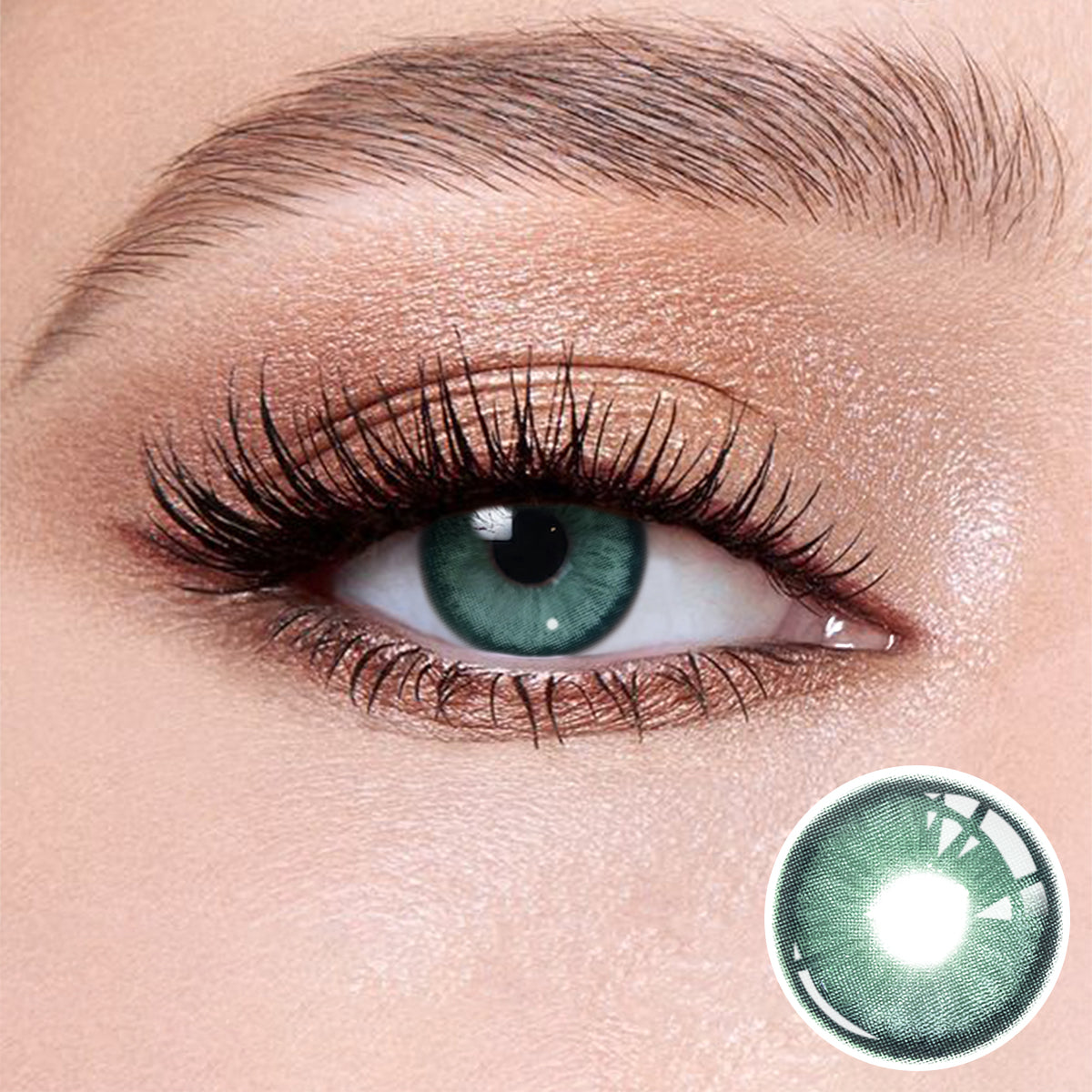
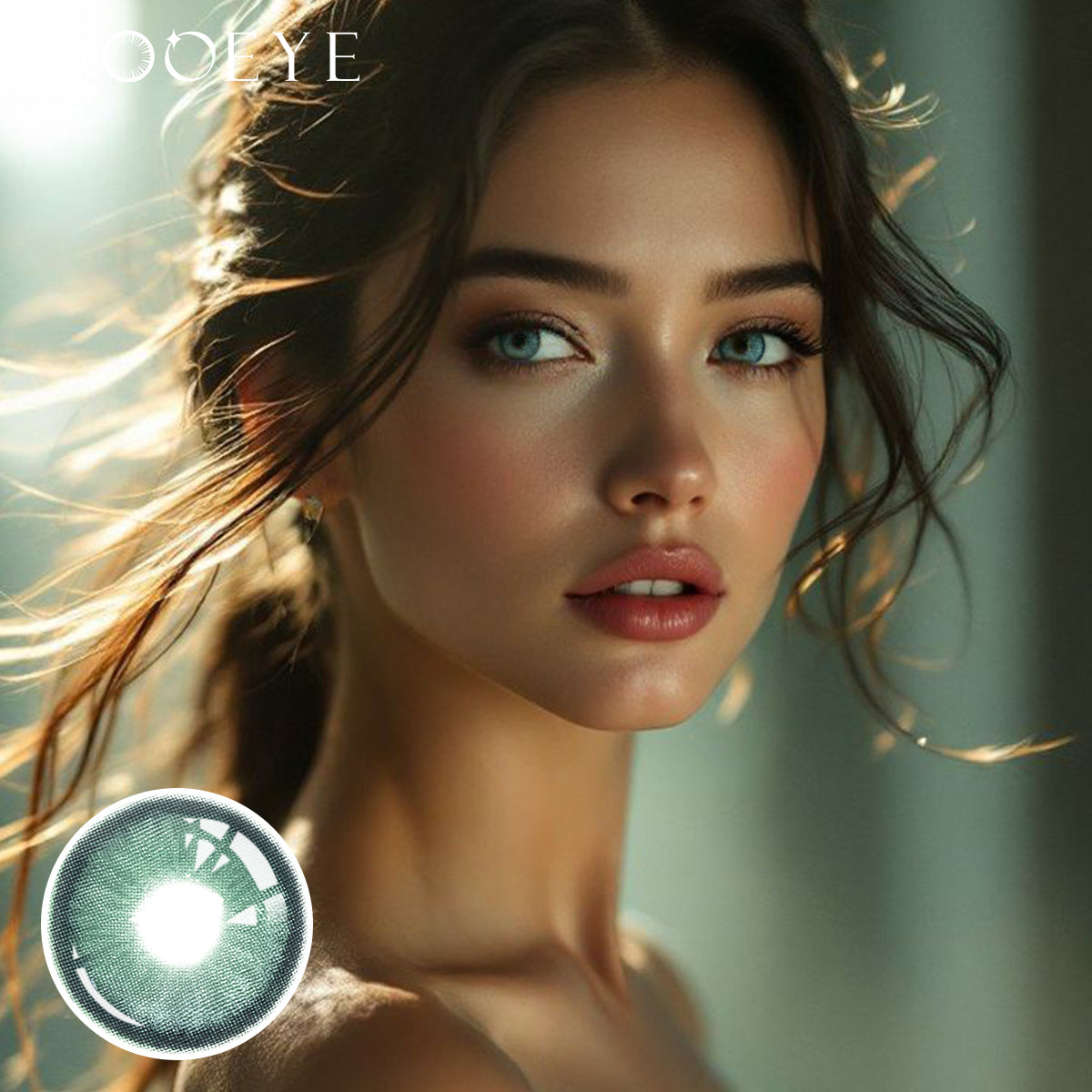
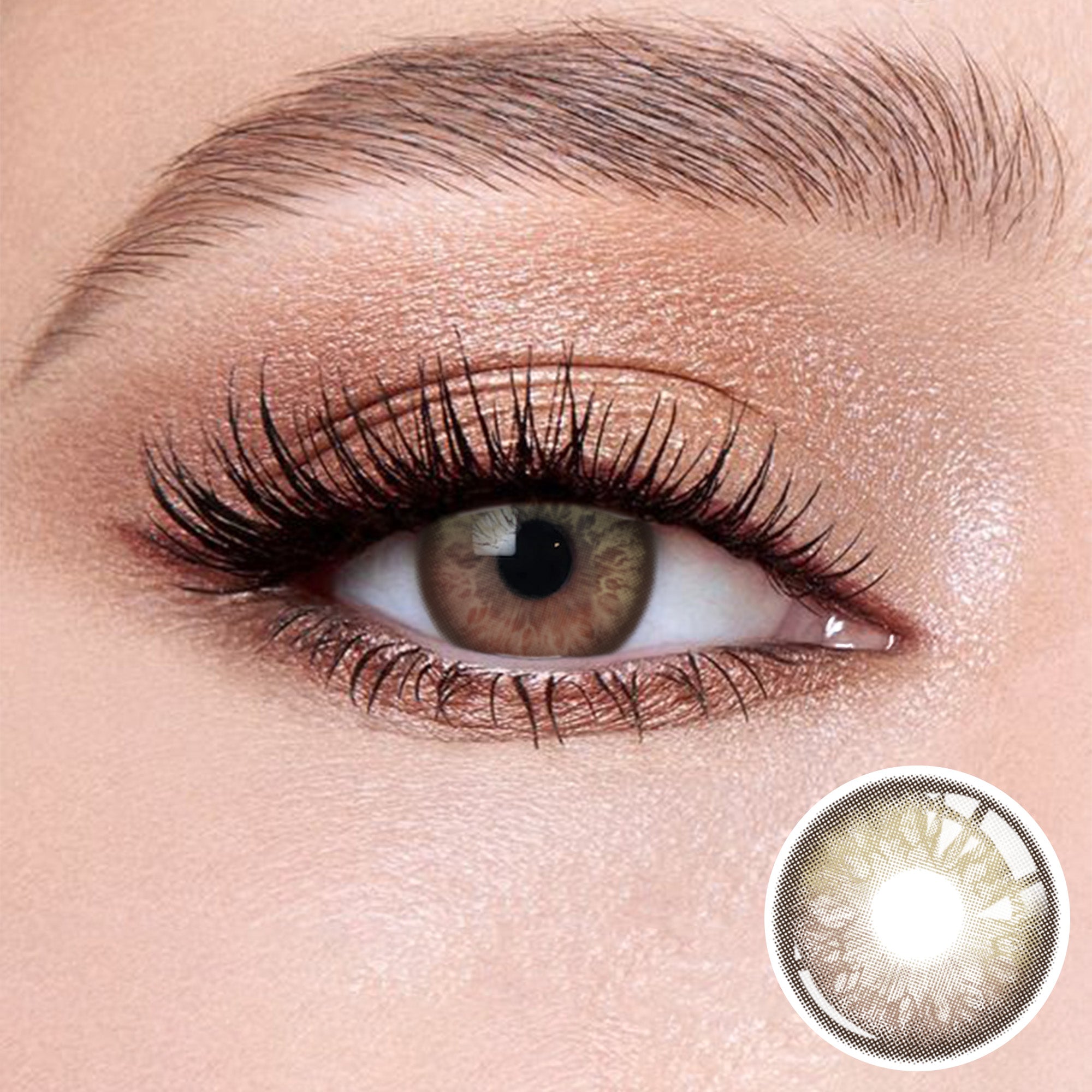
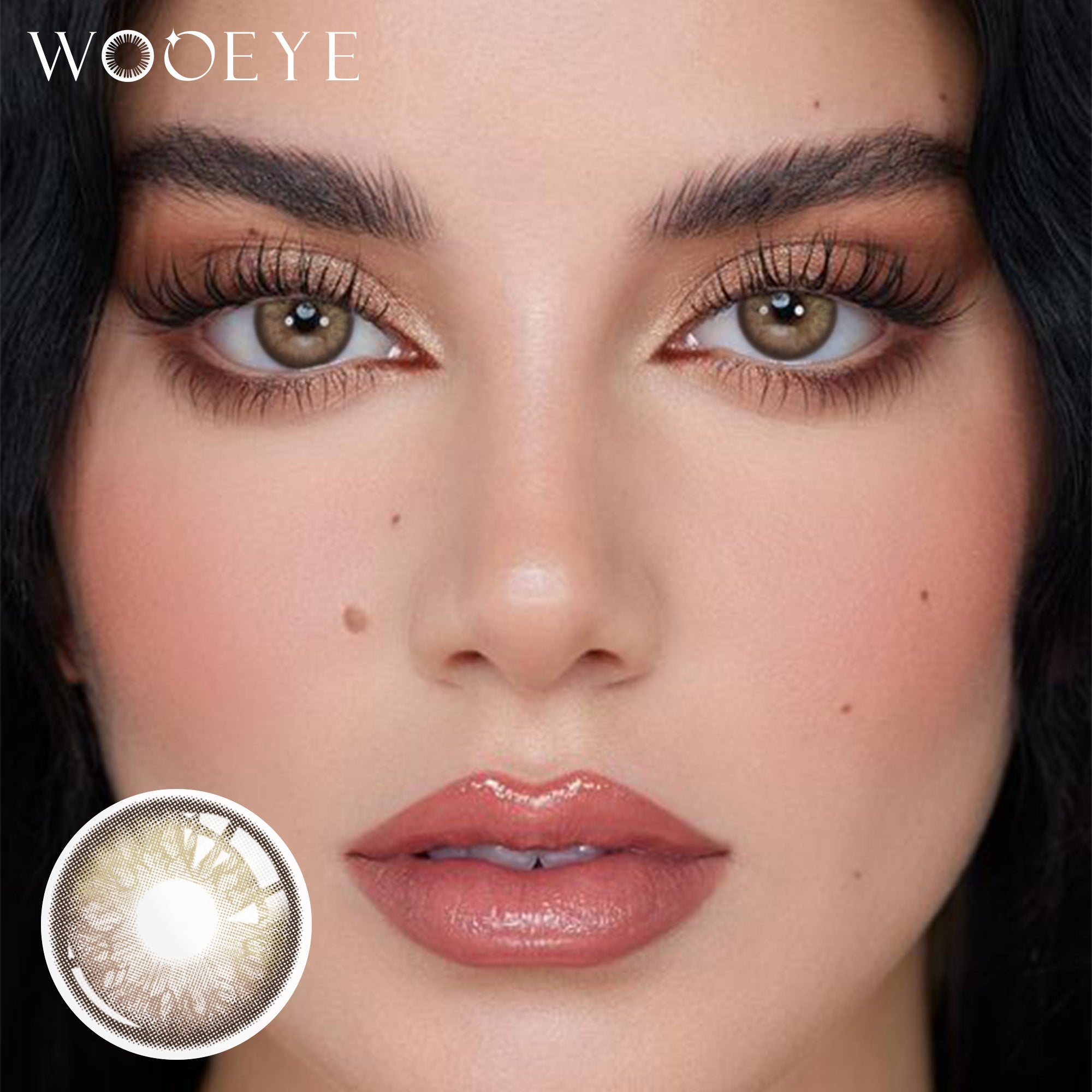
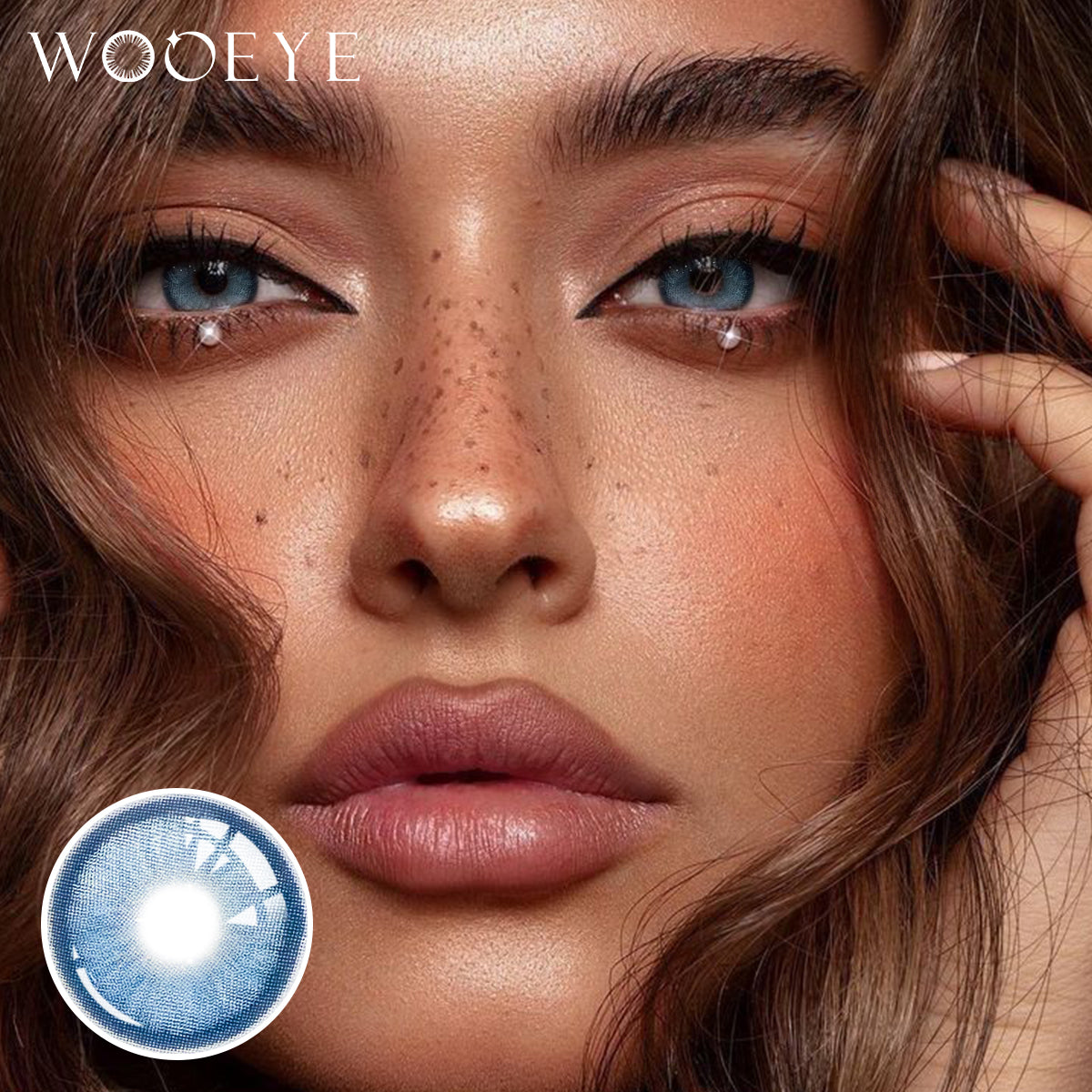
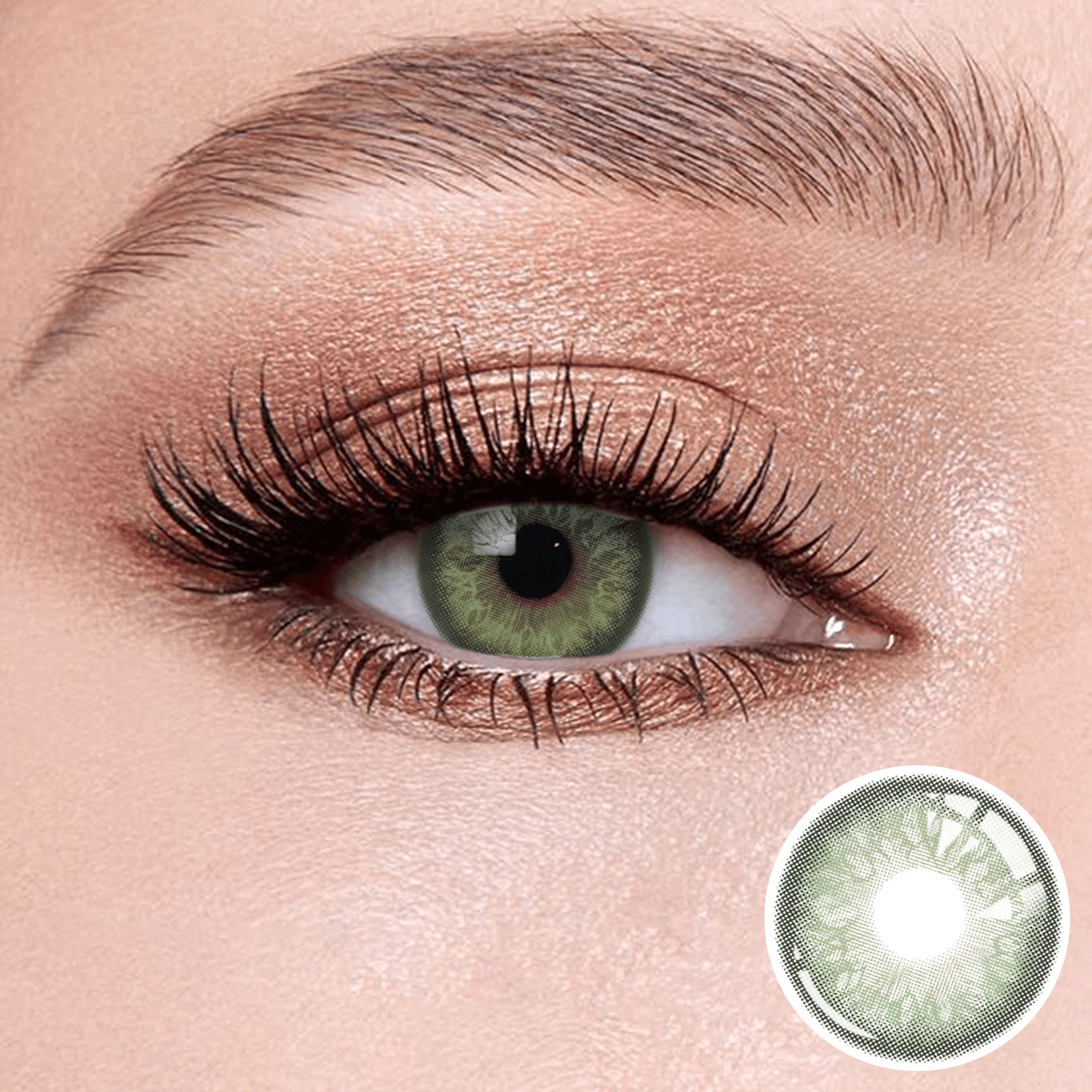
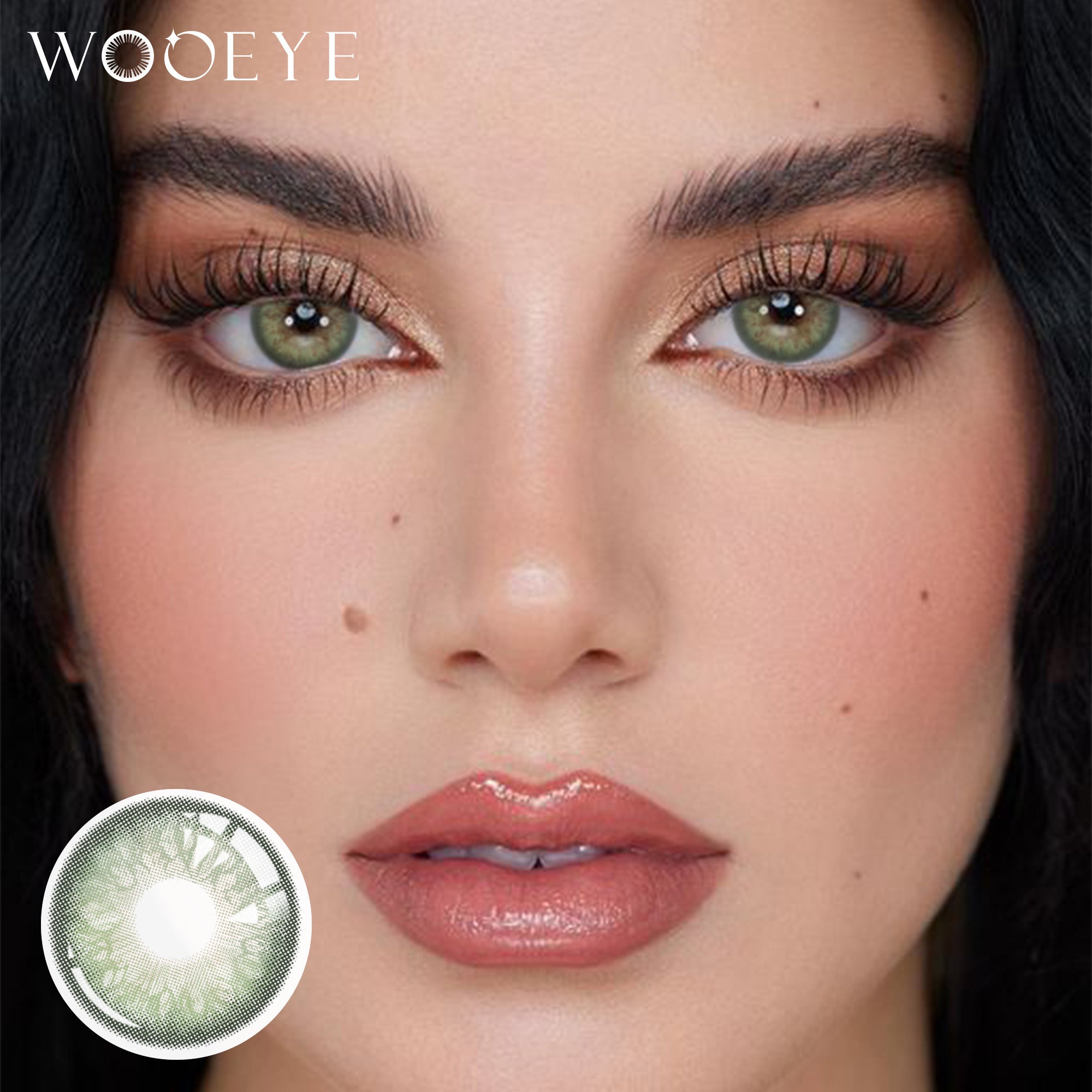
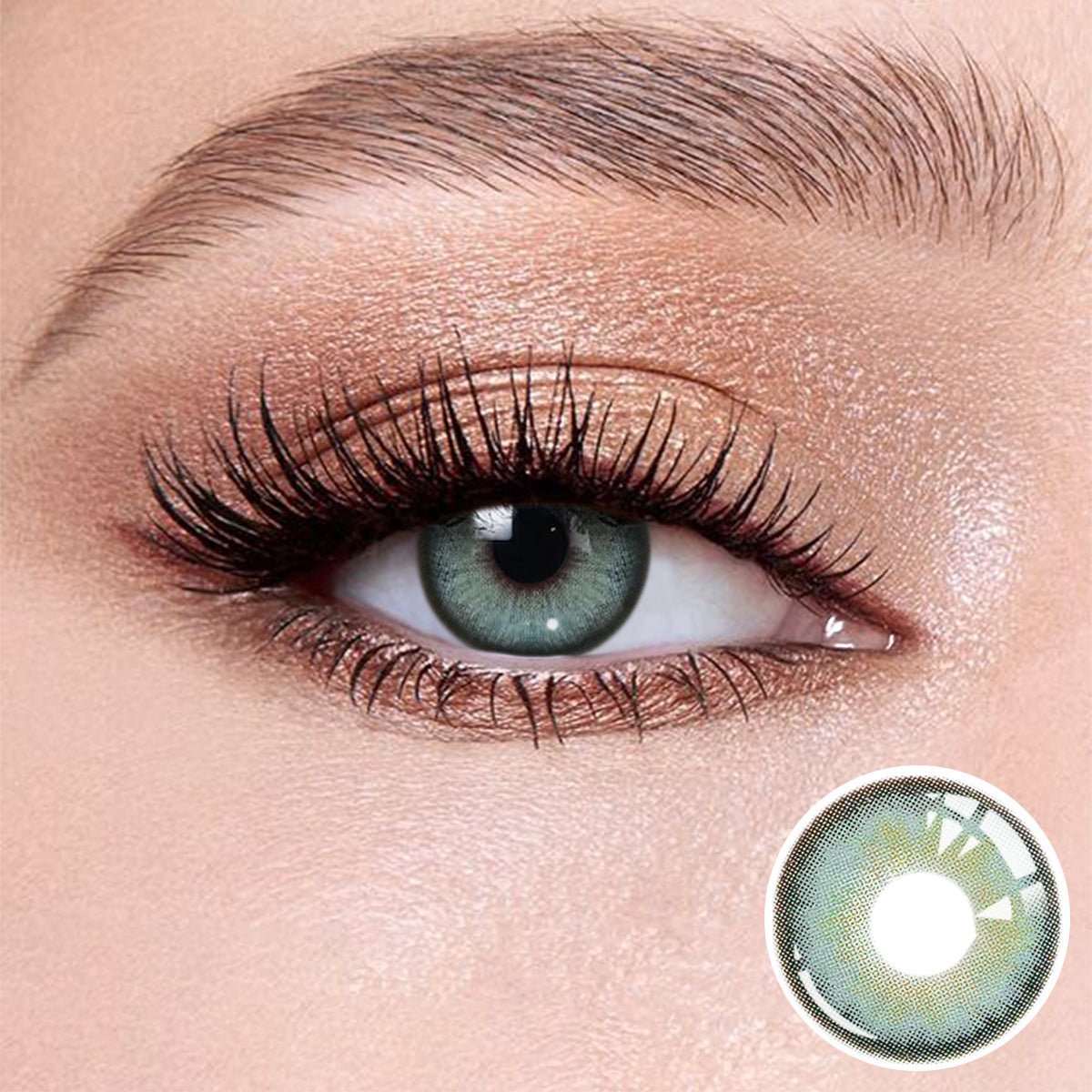
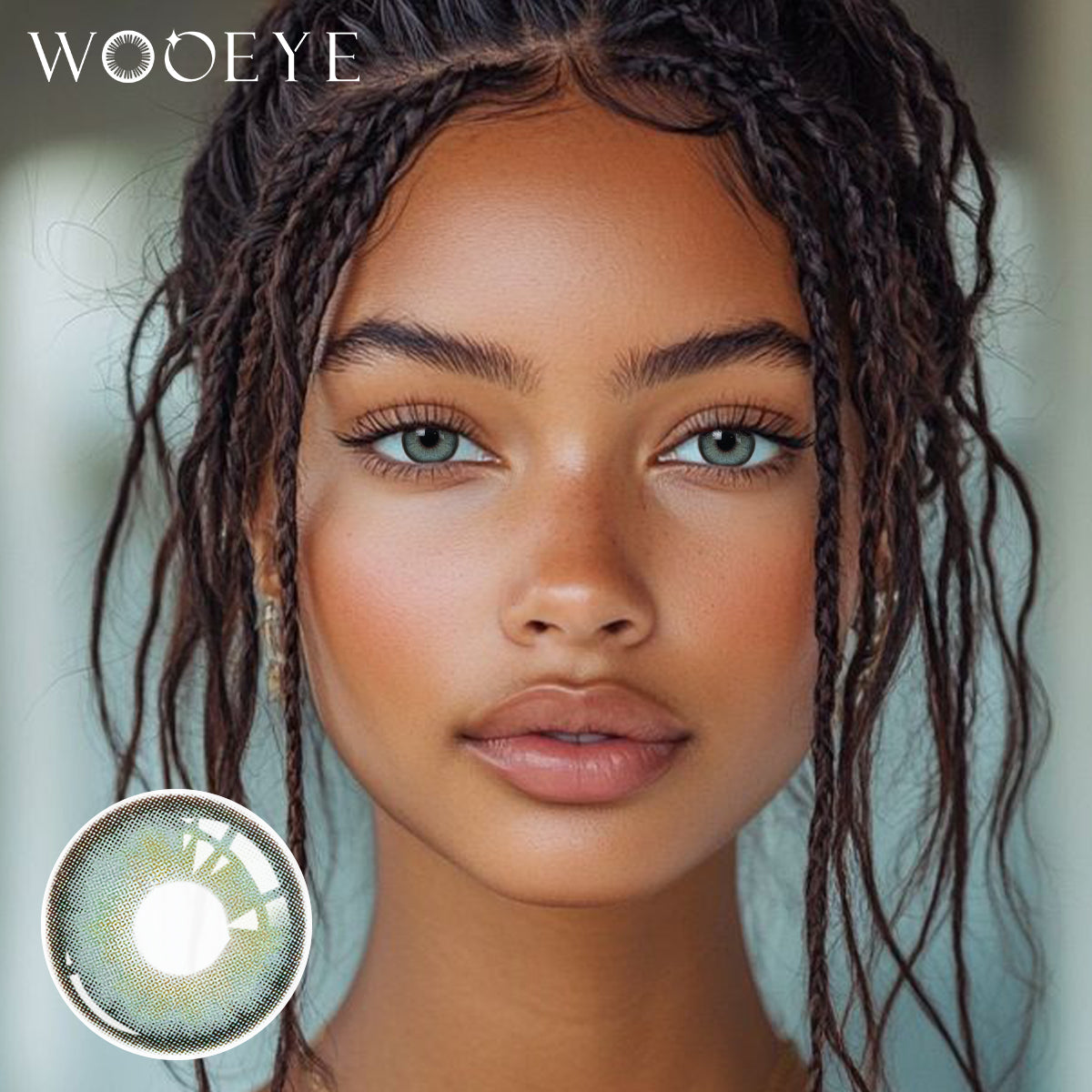
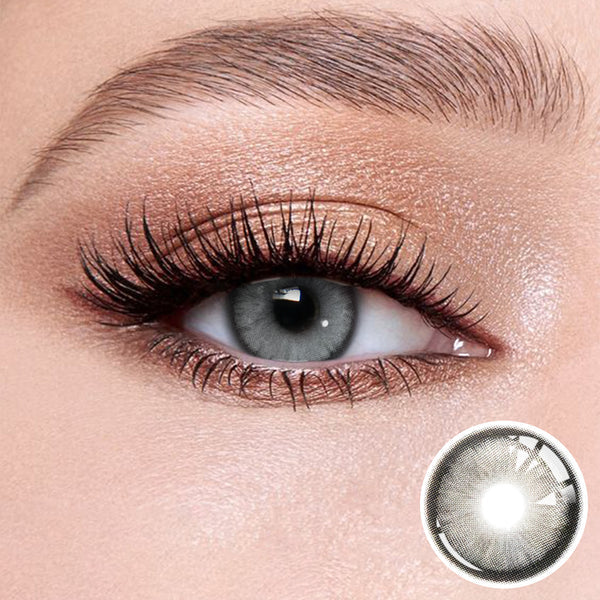
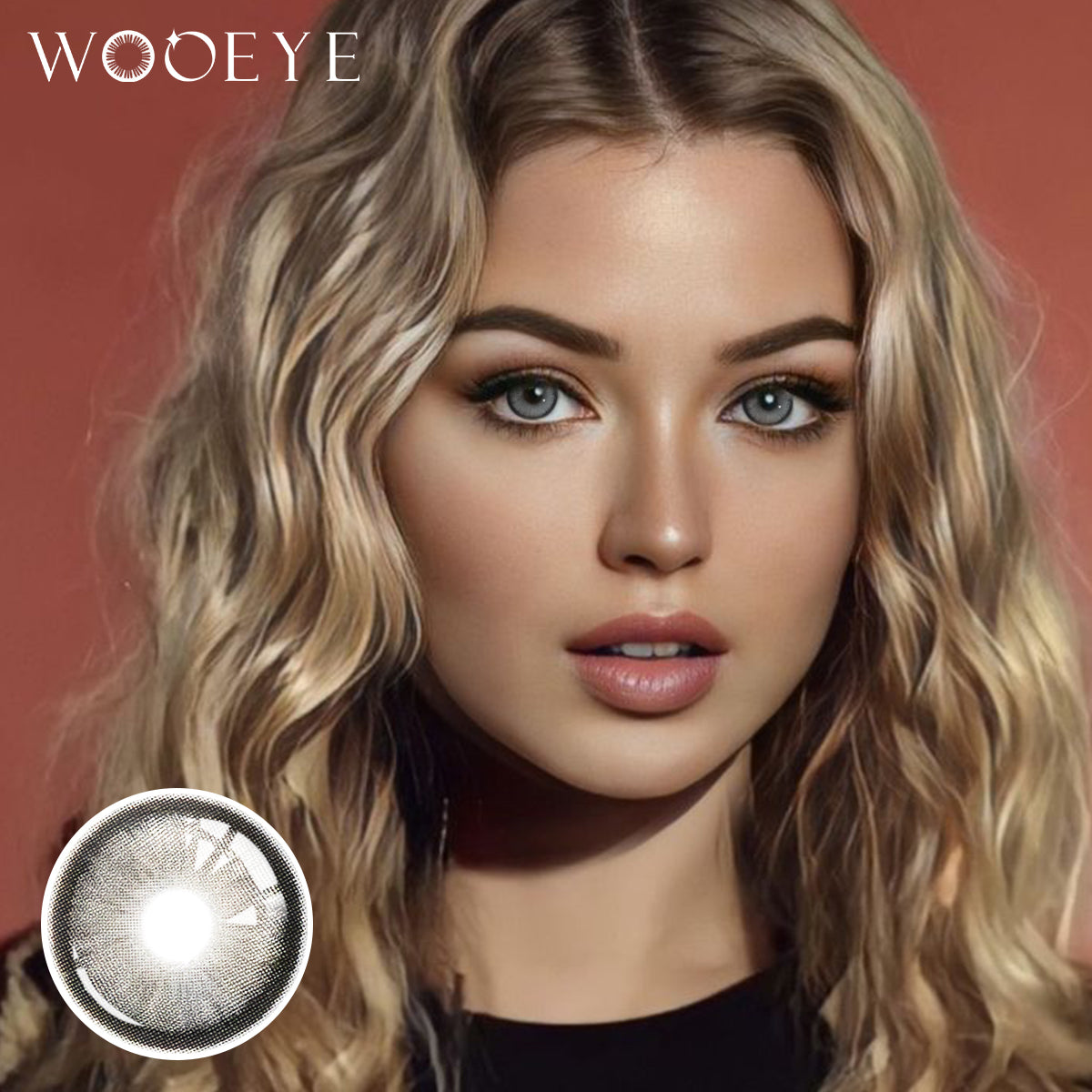
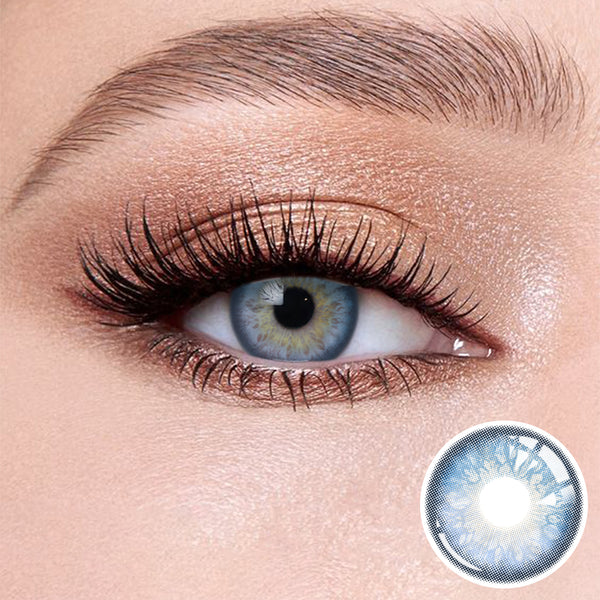
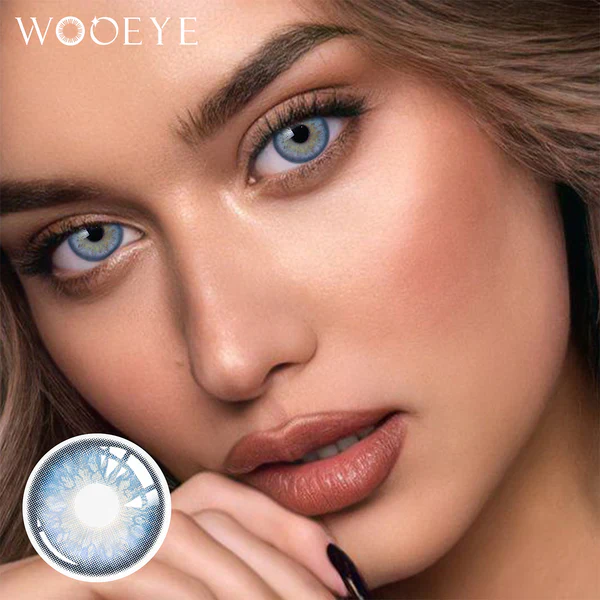
Premium contact lenses are different because they usually pay more attention to material quality, oxygen flow, lens design, manufacturing consistency, surface smoothness, and prescription accuracy.
For colored contact lenses, the difference can also come from how the color pattern is produced and sealed inside the lens. A well-designed lens should balance appearance with comfort and visual performance rather than focusing only on eye color.
The key point is simple: premium does not just mean more expensive. It means more attention has been given to the materials, manufacturing process, fit, and overall lens experience.
Modern colored contact lenses are designed for comfort and safety.
What Makes a Contact Lens "Premium"?
There isn't one universal technical definition of a "premium" contact lens. The term is often used to describe lenses that use more advanced materials or manufacturing processes.
When comparing contact lenses, look beyond the packaging and price. Consider these factors:
- Lens material
- Oxygen transmission
- Water content
- Surface design
- Manufacturing consistency
- Color technology for colored lenses
- Prescription availability
- Fit and comfort
- Quality control and regulatory compliance
Two lenses can look almost identical in a product photo but feel very different after several hours of wear.
This is particularly important with colored contact lenses, because the lens has an additional cosmetic component compared with a clear prescription lens.
1. Material Is One of the Biggest Differences
Contact lenses are made from specialized polymers designed to interact with the surface of the eye.
One material commonly used in soft contact lenses is HEMA material, a hydrogel material that has been used in contact lens manufacturing for decades.
Material choice matters because it affects:
- Water content
- Oxygen transmission
- Flexibility
- Surface properties
- How the lens feels on the eye
A lens that feels comfortable for one person may not feel the same for another. Eye shape, tear film, wearing time, environment, and lens fit all matter.
Material choice directly affects comfort and oxygen flow.
That's why simply comparing the price of two contact lenses doesn't tell you much about their actual performance.
2. Oxygen Flow Matters
Your cornea does not receive oxygen from blood vessels like most other tissues. It gets much of its oxygen from the surrounding environment.
A contact lens sits directly over the cornea, so lens design and material influence how oxygen reaches the eye.
This is one reason oxygen transmission is an important consideration when choosing contact lenses.
However, higher oxygen transmission does not automatically mean a lens will be more comfortable for everyone.
Comfort is influenced by multiple factors, including:
- Material
- Lens thickness
- Water content
- Surface properties
- Fit
- Wearing schedule
- Individual tear production
A premium lens is therefore not simply "the lens with the most oxygen." It is the combination of material and design that matters.
3. Water Content Isn't the Whole Story
Water content is another number you'll see when comparing contact lenses.
Some hydrogel lenses contain a relatively high percentage of water. This can make a lens feel soft and comfortable initially.
But there is an important tradeoff.
A higher-water hydrogel can lose water during extended wear, particularly in dry environments.
Think about a typical New York day: you put your lenses in before leaving home, spend several hours in an air-conditioned office, walk outside in dry or windy weather, and then head to dinner.
Your eyes are experiencing a very different environment throughout the day.
So when comparing colored contact lenses, don't assume that the highest water content automatically means the best lens. The entire material system matters.
4. Premium Colored Contacts Need Good Color Technology
With clear lenses, the material and optical design are the main focus.
With colored contact lenses, there is another important consideration: the color pattern.
The pigment needs to create the desired appearance without compromising the lens surface or optical performance.
One approach used in colored lens manufacturing is sandwich technology.
With sandwich technology, the color pattern is designed to be enclosed within layers of lens material rather than simply sitting as an exposed layer on the surface.
The purpose is to create a more integrated lens structure and help keep the colored pattern contained within the lens.
This is particularly relevant for people who want colored contacts that look natural rather than obviously printed.
HEMA Material · Sandwich Technology · Up to -8.00
WOOEYE Premium Prescription Colored Contacts
Natural-looking color with vision correction — brown, gray, green & more.
Shop Prescription Contacts →5. Natural Color Is About More Than Pigment
A premium-looking colored contact doesn't necessarily mean a brighter or more dramatic color.
Natural-looking results often come from the relationship between:
- Base eye color
- Outer limbal ring
- Color gradient
- Pupil opening
- Pattern density
- Transparency
- Individual eye shape
For example, a brown lens doesn't have to completely cover your natural eye color. A subtle brown gradient can allow some of the natural iris to show through, creating a softer result.
This is often more believable in everyday settings. In NYC, that's useful when you're wearing contacts to work, grabbing coffee downtown, or meeting friends after work. You may want people to notice that your eyes look different without immediately thinking, "She's wearing colored contacts."
6. Prescription Accuracy Matters
Prescription colored contacts can correct vision while changing eye color.
But there is an important distinction between prescription lenses and simply choosing a colored lens with a number printed on the box.
Contact lens prescriptions are not always identical to glasses prescriptions, particularly at stronger powers. Fit, base curve, diameter, and prescription requirements can all affect how a contact lens performs.
For people with stronger prescriptions, this becomes even more important. A colored contact lens should not be selected based only on the cosmetic shade. The prescription and lens fit need to be appropriate as well.
7. Manufacturing Consistency Is Easy to Overlook
One of the less visible differences between contact lenses is manufacturing consistency.
A well-controlled manufacturing process aims to keep things such as:
- Lens dimensions
- Prescription power
- Color pattern
- Material properties
- Surface quality
within the required specifications.
This is one reason regulated contact lenses should be purchased from legitimate sources rather than choosing a lens purely because it is cheap. The eye is sensitive. A contact lens is not just a fashion accessory.
Premium vs. Basic Contact Lenses
| Factor | Basic Lens | Premium-Positioned Lens |
|---|---|---|
| Material | Standard lens material | More attention to material selection |
| Oxygen flow | Depends on material | Carefully considered in lens design |
| Water content | Varies | Balanced with other material properties |
| Color pattern | Basic designs available | More detailed gradients and patterns |
| Color technology | Varies | May use sandwich technology |
| Prescription options | May be limited | Often broader options |
| Manufacturing | Varies by manufacturer | Greater emphasis on consistency |
| Comfort | Highly individual | Designed with comfort factors in mind |
| Price | Usually lower | Usually higher |
This doesn't mean every premium-priced lens will work better for every person. Your eyes ultimately decide what feels comfortable.
HEMA Material vs. Other Lens Materials
HEMA material is important in the history of soft contact lenses, but it isn't the only material used today.
Some newer materials, such as silicone hydrogel, were developed to increase oxygen transmission compared with traditional hydrogel designs.
That doesn't mean HEMA material is automatically bad or that silicone hydrogel is automatically better.
The important question is how the material, lens design, fit, and wearing schedule work together. For colored contact lenses, the color technology also becomes part of the equation.
Why Premium Contacts Can Feel Better
When someone says a premium contact lens "feels better," several things could be happening.
The lens may have:
- A smoother surface
- A better-fitting geometry
- Appropriate flexibility
- A material suited to the wearer's eyes
- Better moisture management
- Consistent thickness
- Better optical design
But comfort is personal. A lens that works beautifully for someone spending eight hours in a New York office may not be ideal for someone spending eight hours outdoors.
What About Premium Colored Contacts?
For colored contacts, premium design usually becomes a combination of appearance + material + optical performance + manufacturing quality.
A well-designed colored lens should consider:
Natural appearance — the color should blend with the existing iris rather than looking like a flat sticker.
Comfort — the lens material and surface need to work with the wearer's eyes.
Vision — prescription lenses need to provide the appropriate optical correction.
Color structure — patterns, gradients, and pupil openings influence how realistic the lens looks.
Manufacturing — consistency matters from one lens to the next.
This is where technologies such as sandwich technology can become relevant to colored lens construction.
NYC Lifestyle: When Premium Contacts Actually Matter
Imagine a normal Saturday in New York.
You put your contacts in around 9 AM, grab coffee, take the subway downtown, spend the afternoon walking around SoHo, meet friends for dinner, and don't get home until 10 PM.
That's a long day.
The difference between a lens that feels fine for two hours and one that remains comfortable throughout your planned wearing period becomes much more noticeable.
For that kind of lifestyle, the goal shouldn't be finding the most expensive lens. It should be finding a lens whose material, design, prescription, and wearing schedule work for your eyes.
How WOOEYE Approaches Premium Colored Contacts
WOOEYE focuses specifically on colored contact lenses, including prescription options.
Its lens design uses HEMA material, approximately 40% water content, and sandwich technology to integrate the color pattern within the lens structure.
The brand's positioning can be summarized as:
comfort + natural + safe + prescription-ready colored contacts
The idea is that changing your eye color doesn't have to mean choosing between a natural appearance and prescription vision correction.
For someone who wants a subtle everyday change, a brown or hazel shade can be easier to incorporate into an everyday makeup routine than a highly dramatic color.
Explore WOOEYE colored contact lenses
FAQ: Premium Contact Lenses
Are premium contact lenses worth the extra money?
It depends on what you value. Material, fit, oxygen transmission, manufacturing consistency, prescription availability, and color design can all affect the wearing experience. Price alone doesn't guarantee a better result.
Are premium colored contacts safer?
A higher price does not automatically make a lens safer. Look for legitimate products, appropriate prescriptions, proper fitting, and responsible manufacturing rather than using price as a safety indicator.
Is HEMA material good for contact lenses?
HEMA material has been widely used in soft contact lenses. Its performance depends on the specific lens formulation and design, including water content, thickness, surface properties, and oxygen transmission.
Does higher water content mean better contacts?
Not necessarily. Water content is only one characteristic of a lens material. Comfort depends on the overall material and lens design as well as the individual wearer.
Are premium colored contacts more natural-looking?
They can be, particularly when the lens uses carefully designed gradients, iris patterns, and transparency. But "premium" does not automatically mean more natural. The design itself matters.
Can premium colored contacts correct high prescriptions?
Some colored contacts are available in prescription powers, but availability varies by product. People with stronger prescriptions should use the appropriate contact lens prescription rather than simply copying a glasses prescription.
The biggest difference between premium and basic contact lenses isn't the packaging or the price. It's what happens inside the lens.
Material, oxygen flow, water content, surface design, prescription accuracy, color technology, fit, and manufacturing consistency all contribute to the final experience.
For colored contact lenses, technologies such as HEMA material and sandwich technology can be part of that equation, while the right prescription and fit remain essential.
The best lens isn't necessarily the most expensive one. It's the one whose material, design, prescription, and wearing characteristics match your eyes and your lifestyle.
Designed for Comfort, Built for Color
Shop WOOEYE Premium Colored Contacts
HEMA material · Sandwich technology · Prescription up to -8.00 · Natural shades for every day.