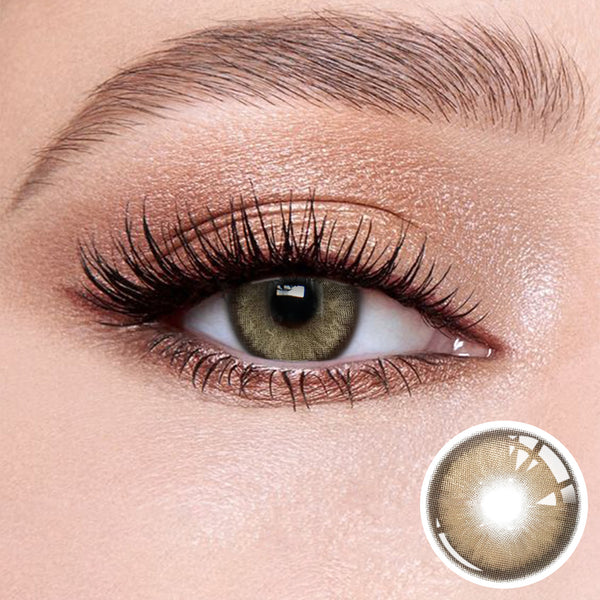
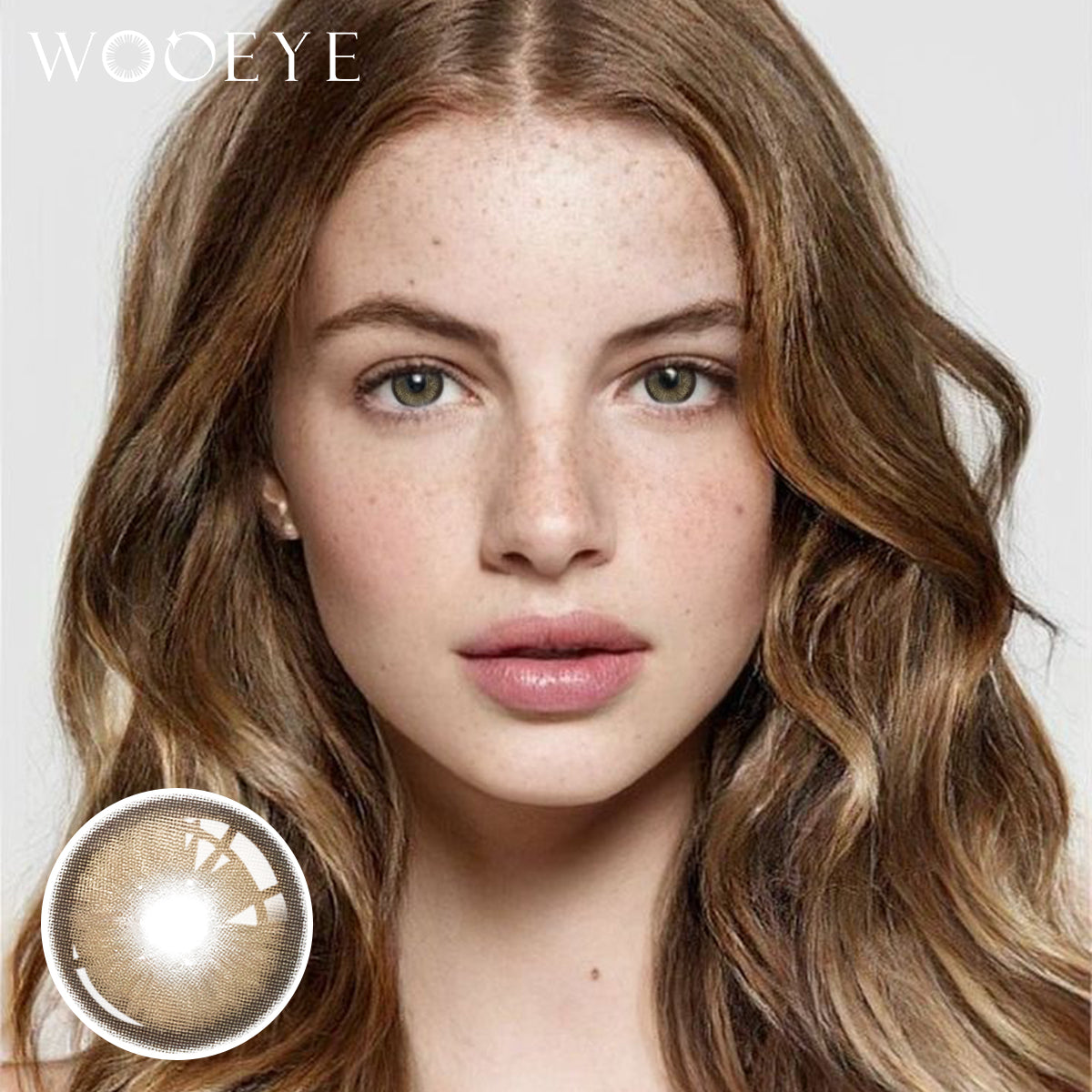
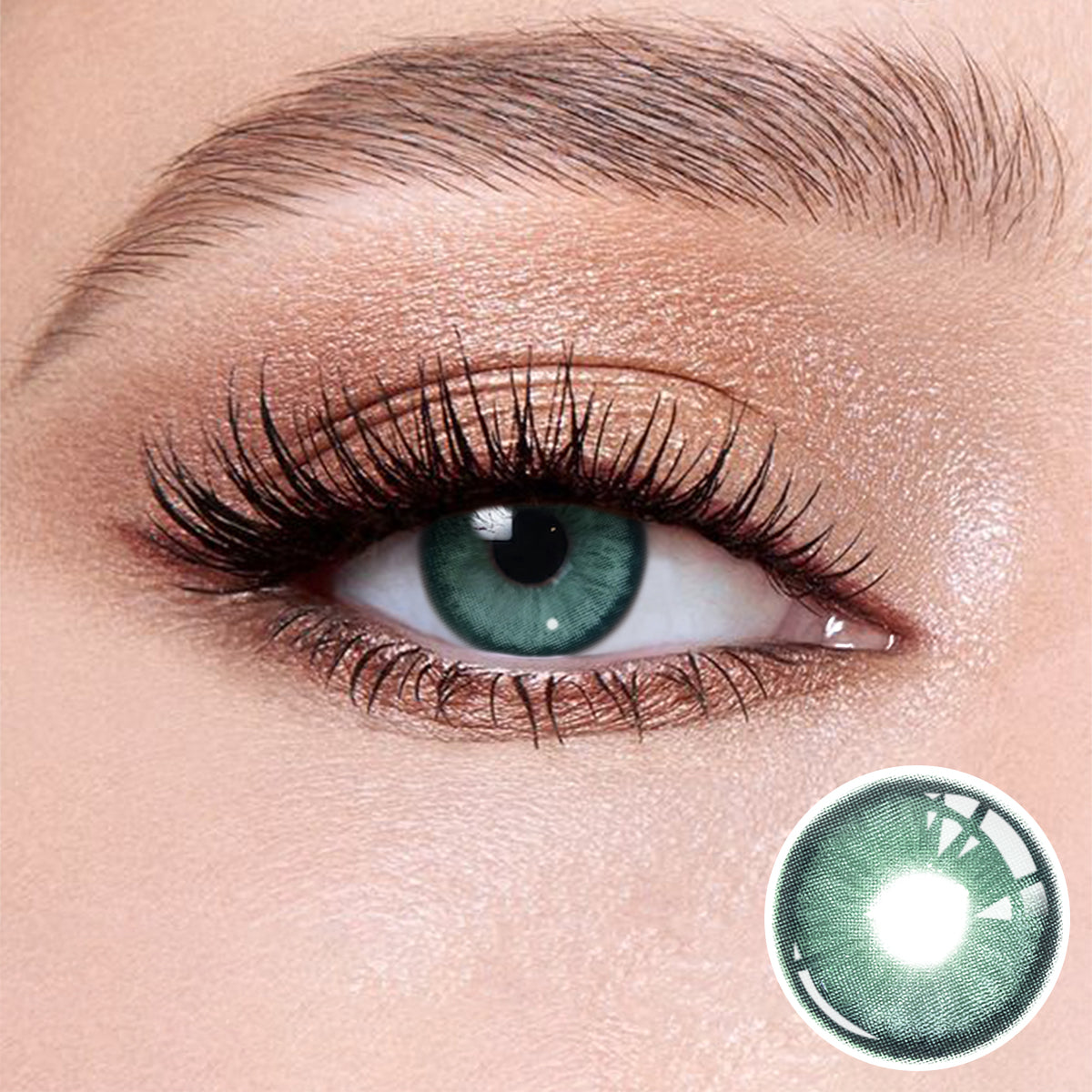
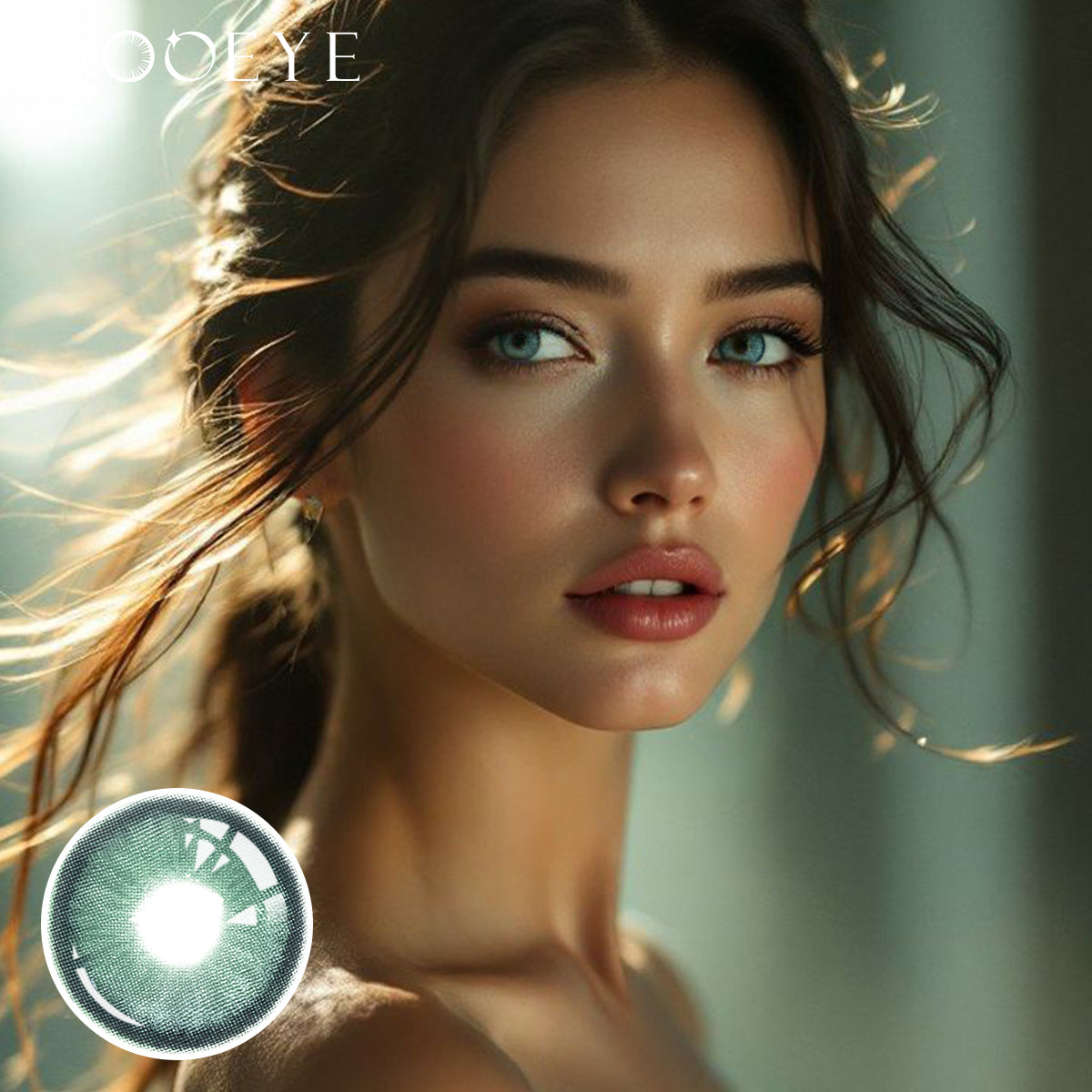
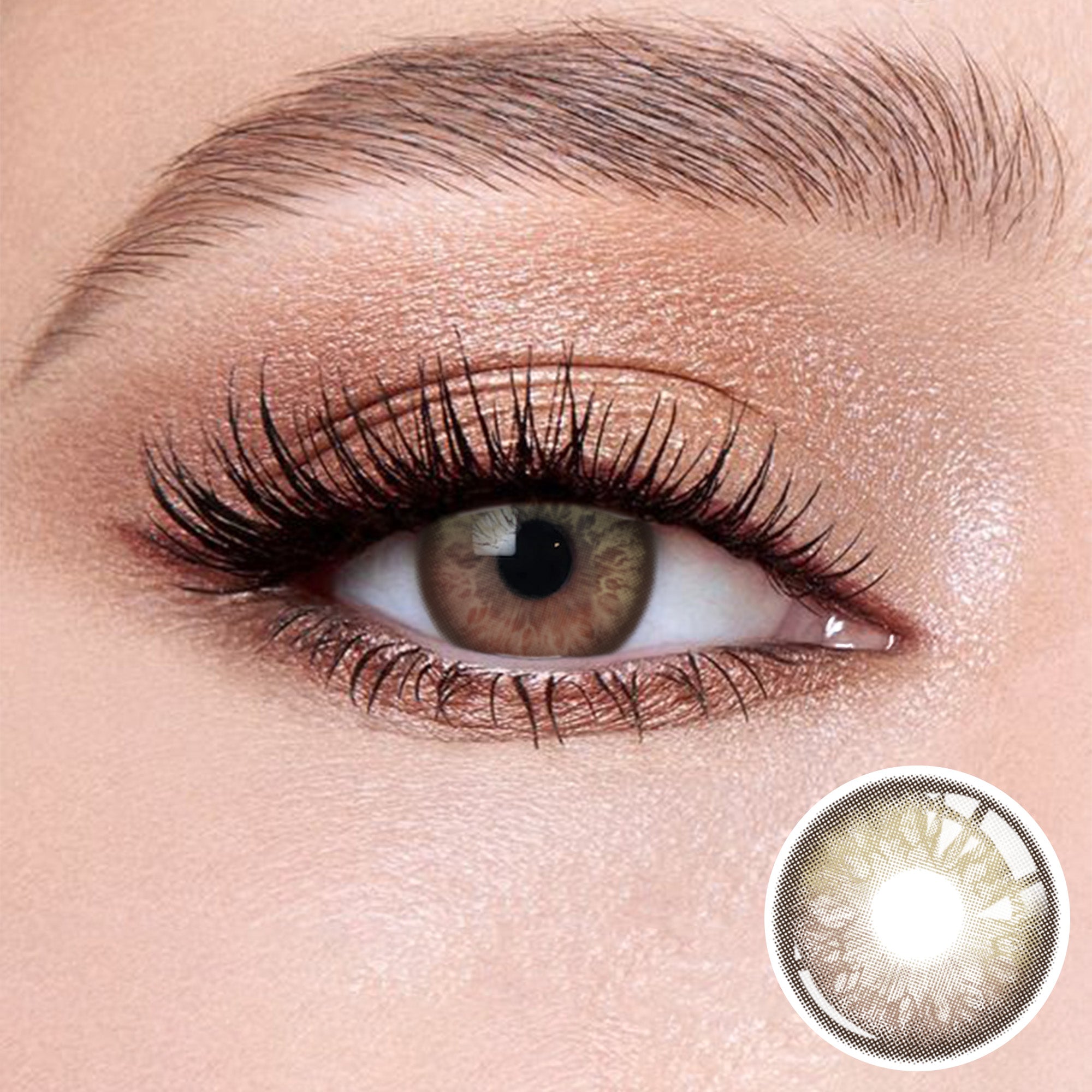
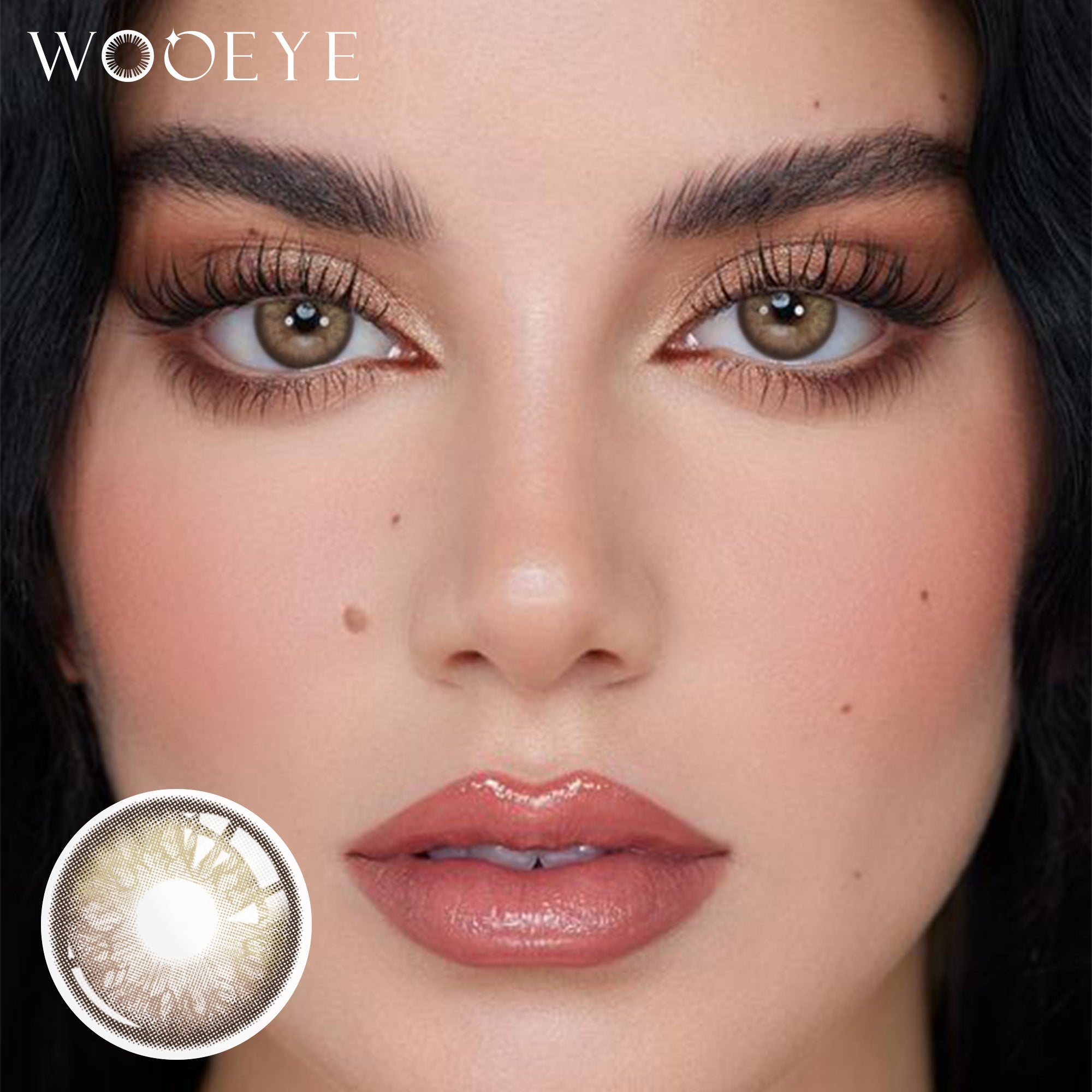
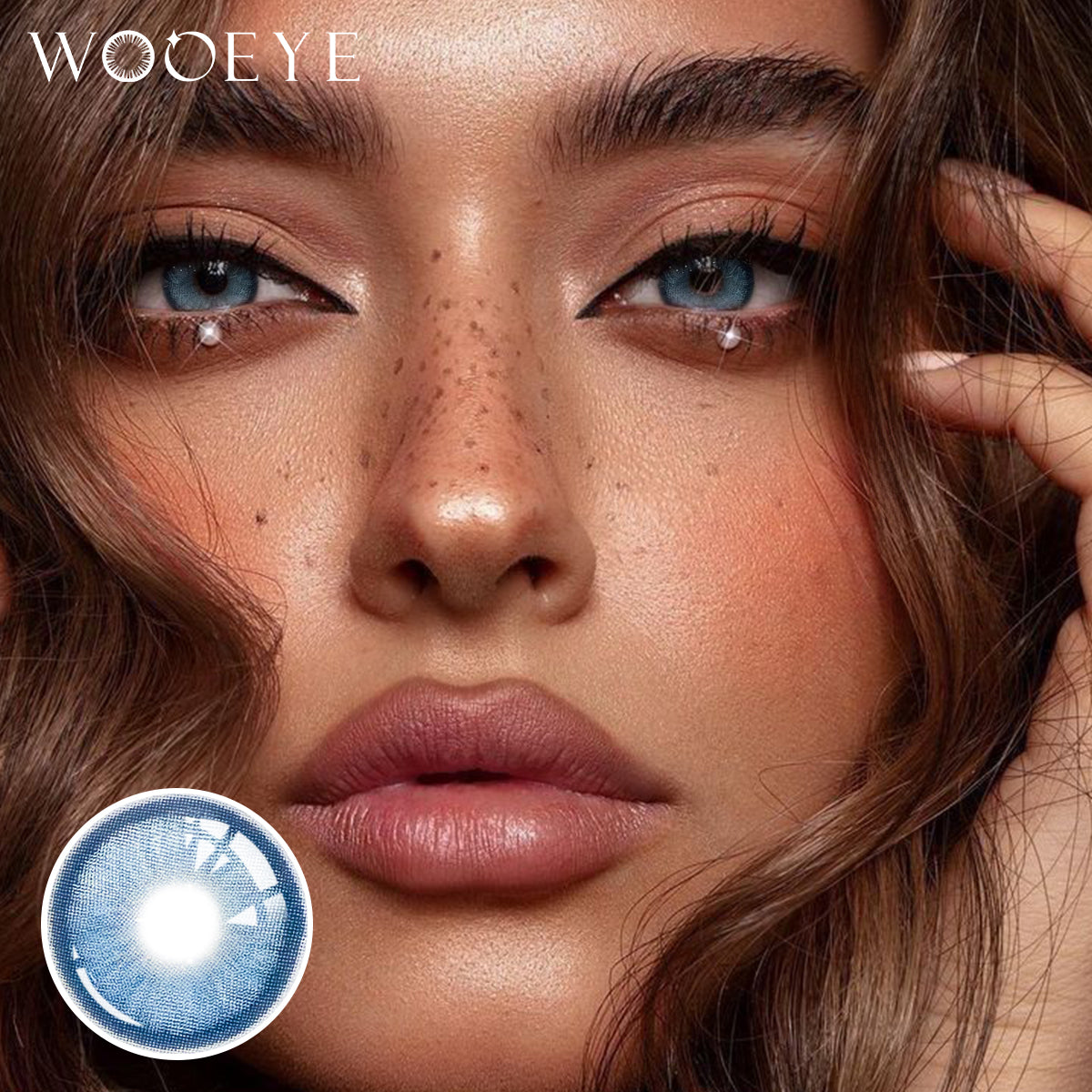
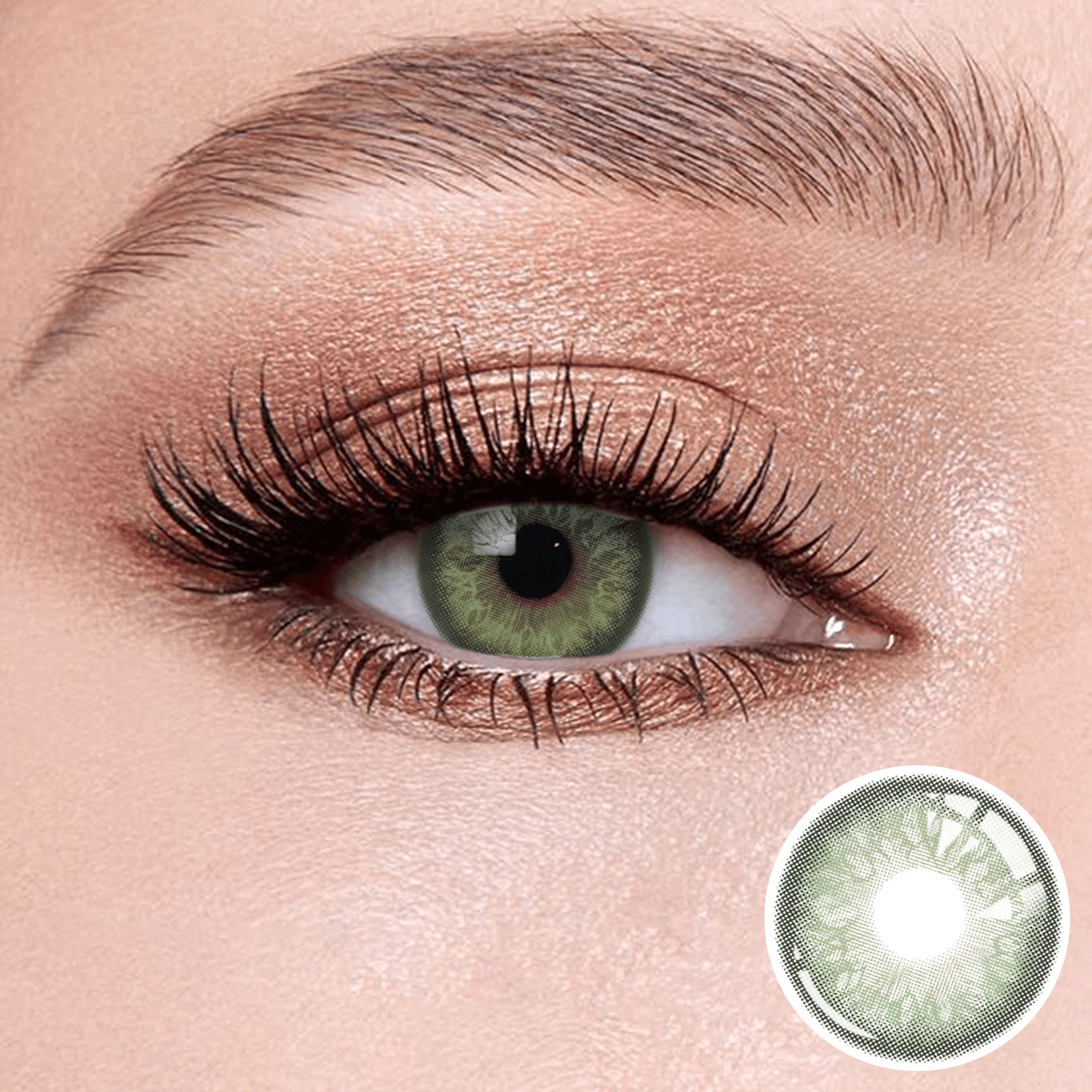
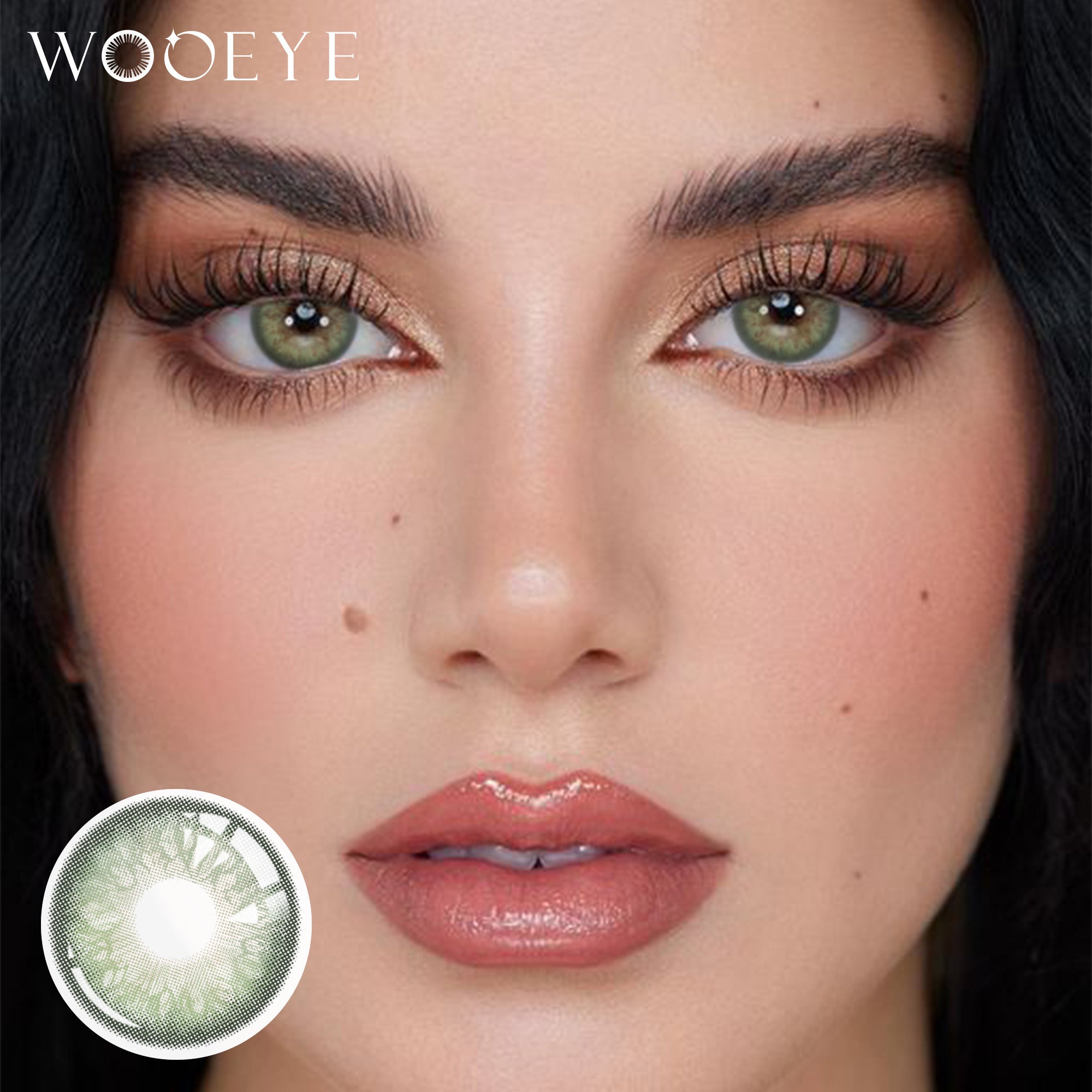
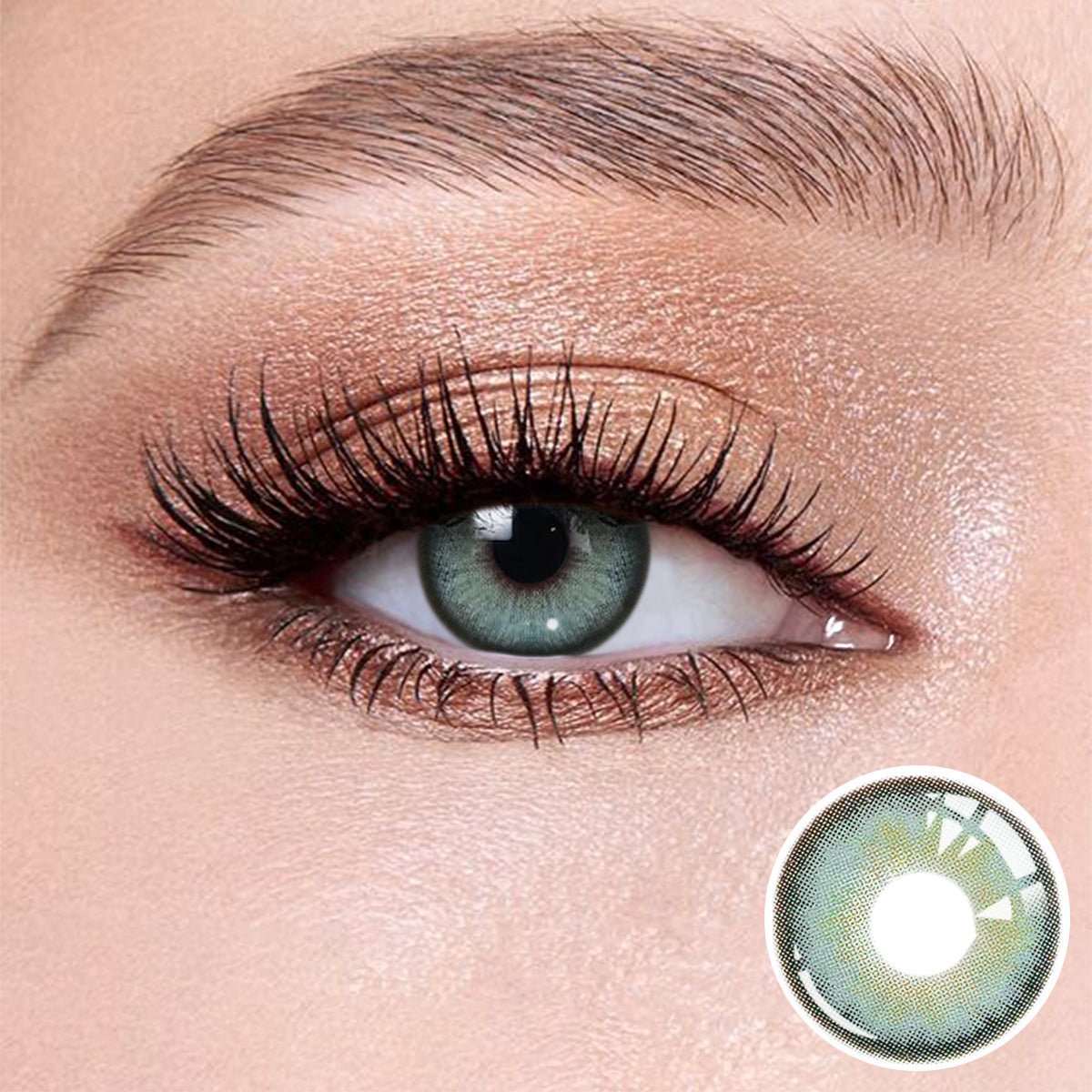
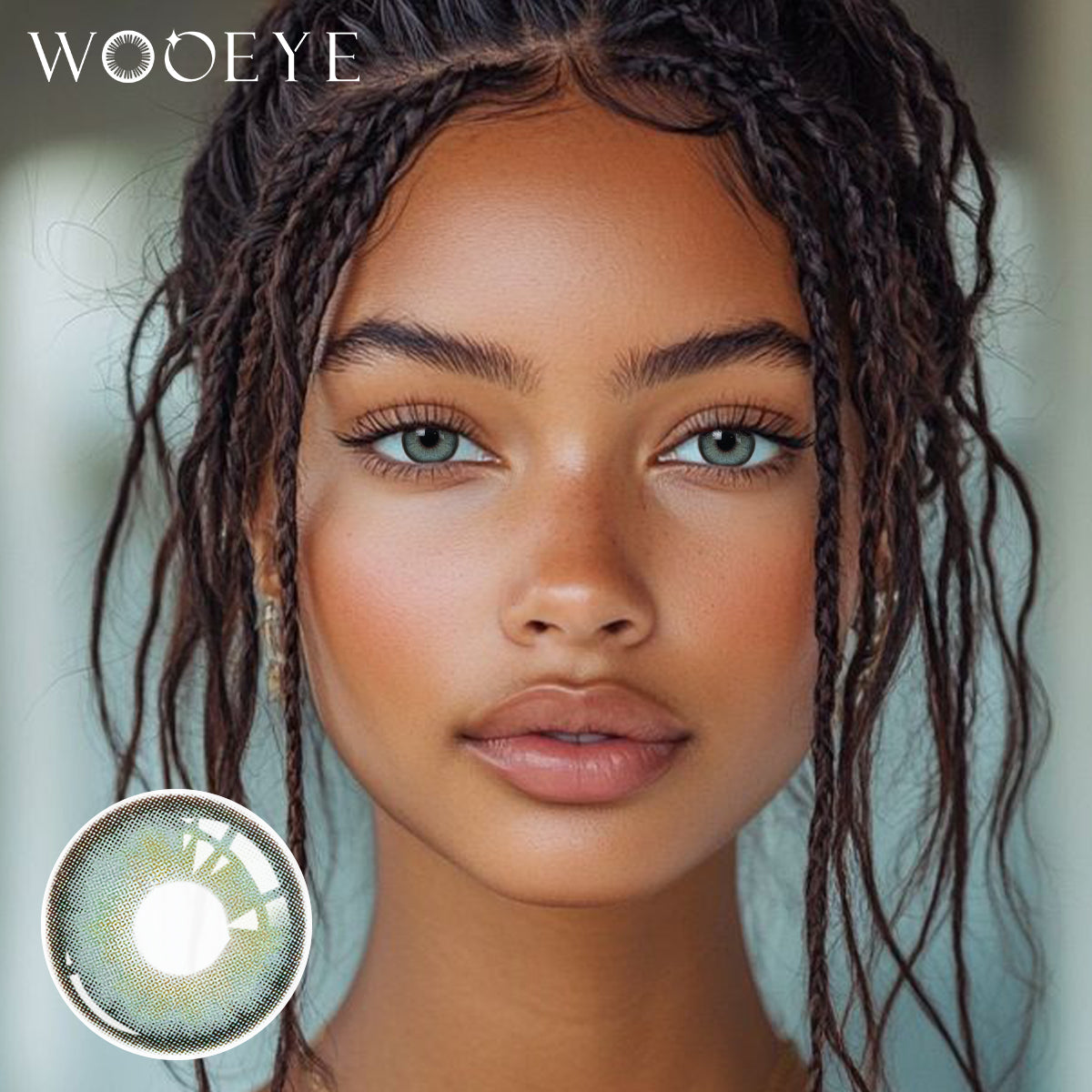
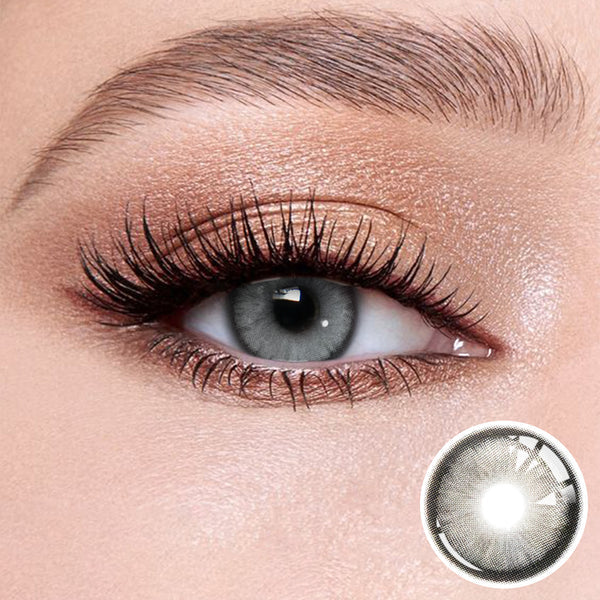
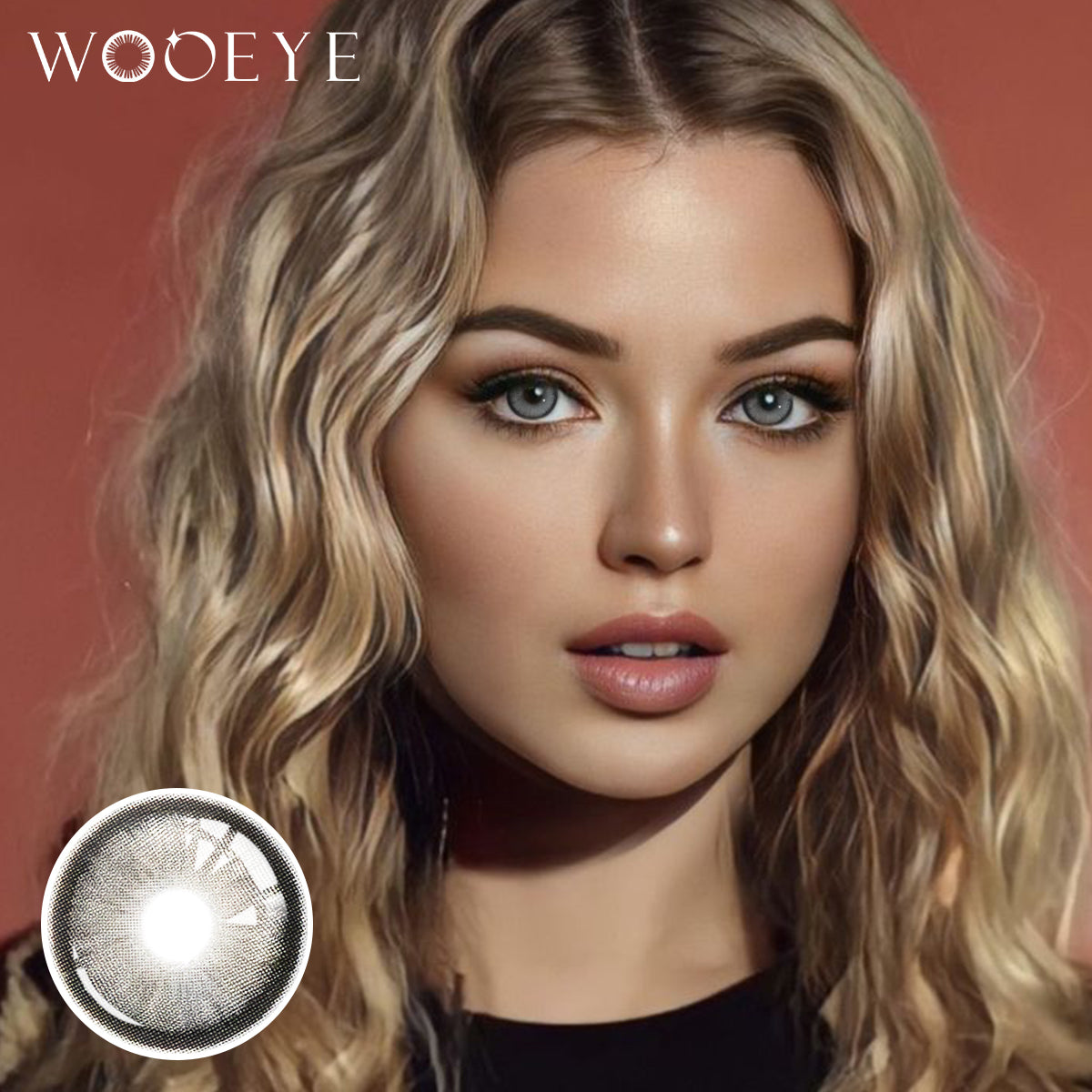
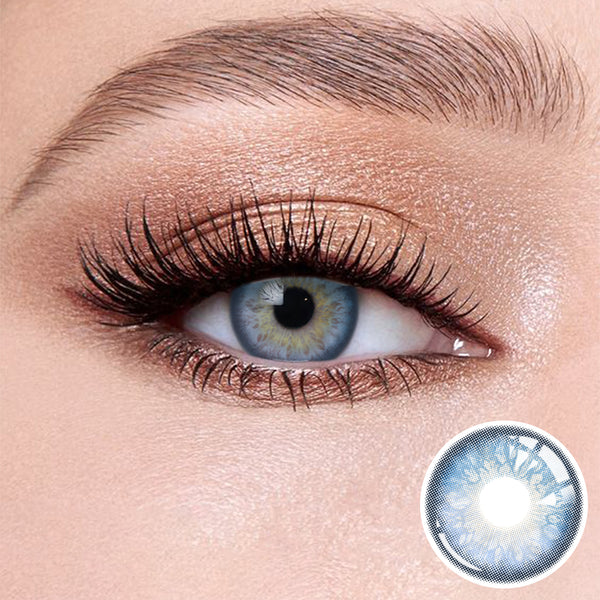
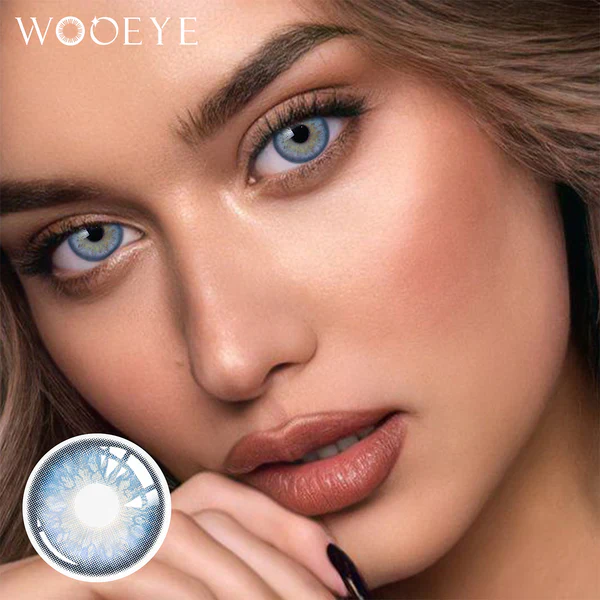
Prescription colored contacts can be safe when they are properly manufactured, appropriately fitted, used according to their instructions, and cared for correctly. The fact that a contact lens has color does not automatically make it less safe than a clear lens.
The important factors are the lens material, pigment construction, prescription, fit, oxygen transmission, hygiene, and wearing schedule.
Modern colored contact lenses are designed for comfort and safety.
For people with myopia, prescription lenses can provide vision correction while also changing eye color. Prescription colored contacts can correct vision while changing eye color.
However, no contact lens should be considered risk-free. If you experience significant pain, redness, discharge, light sensitivity, or sudden changes in vision, remove the lenses and seek professional eye care.
What Are Prescription Colored Contacts?
Prescription colored contacts are contact lenses that combine two functions:
Vision correction + cosmetic eye-color enhancement.
Unlike purely cosmetic lenses, prescription colored contact lenses are available with corrective powers for people who need help seeing clearly.
For example, someone with myopia may choose prescription colored contacts in:
· Brown
· Hazel
· Gray
· Olive
· Green
The prescription corrects vision, while the colored portion changes or enhances the appearance of the iris.
Are Prescription Colored Contacts Safer Than Non-Prescription Colored Contacts?
Not necessarily.
A prescription does not automatically make a contact lens safer.
Safety depends on the complete product and how it is used.
Important factors include:
· Appropriate prescription
· Proper lens fit
· Quality manufacturing
· Lens material
· Oxygen transmission
· Pigment placement
· Hygiene
· Replacement schedule
· Wearing time
A well-made prescription lens can be a good option, but simply adding a prescription to a lens does not eliminate the normal risks associated with contact lens wear.
What Makes Prescription Colored Contacts Safe?
1. Correct Prescription
The lens needs to provide the appropriate vision correction for the wearer.
Your glasses prescription and contact lens prescription are not always identical, particularly at stronger prescription powers.
This is why choosing the correct prescription lenses matters.
WOOEYE offers prescription colored contacts for myopia up to -8.00 diopters, giving people with stronger prescriptions more options.
Vision Correction + Color Change
WOOEYE Prescription Colored Contacts — Up to -8.00
Natural-looking colors with the vision correction you need. Brown, gray, hazel, green & more.
Shop Prescription Contacts →
2. Proper Lens Fit
Even if the prescription is correct, the lens still needs to fit your eye appropriately.
Factors such as:
· Base curve
· Diameter
· Corneal shape
· Lens movement
· Tear film
can influence both comfort and visual clarity.
A lens that moves excessively when you blink may cause fluctuating vision or discomfort.
3. Material and Oxygen Transmission
Your cornea receives oxygen from the surrounding environment.
Because a contact lens sits directly over the cornea, its material and thickness affect oxygen transmission.
Material choice directly affects comfort and oxygen flow.
This is particularly important when considering lenses intended for regular daily wear.
HEMA Material: Is It Safe for Colored Contacts?
Many soft colored contact lenses use HEMA material, or Hydroxyethyl Methacrylate.
HEMA is a hydrogel material commonly used in soft contact lens manufacturing.
It can provide:
· Softness
· Flexibility
· Moisture retention
· Natural lens movement
WOOEYE uses HEMA material with approximately 40% water content in its colored lens designs.
However, HEMA material alone does not determine whether a lens is suitable for everyone.
The complete lens design, manufacturing quality, fit, prescription, wearing schedule, and individual eye condition all matter.
What Is Sandwich Technology in Colored Contacts?
One of the key considerations for colored contact lenses is how the pigment is incorporated into the lens.
With sandwich technology, the color pigment is enclosed between transparent lens layers.
The basic concept is:
Transparent lens layer → color pigment → transparent lens layer
This construction is designed to:
· Enclose the pigment
· Keep the outer lens surface smoother
· Create detailed iris patterns
· Support a comfortable wearing experience
This is different from thinking of the color as ordinary makeup simply painted onto the outside of a lens.
Does Sandwich Technology Make Colored Contacts Completely Safe?
No.
Sandwich technology addresses pigment placement, but it does not make a contact lens completely risk-free.
Other factors still matter, including:
· Lens fit
· Material
· Oxygen flow
· Prescription accuracy
· Manufacturing controls
· Cleaning
· Storage
· Wearing time
· Replacement schedule
Think of lens safety as a system rather than a single feature.
Can Prescription Colored Contacts Cause Eye Infections?
They can, particularly when contact lenses are contaminated or used incorrectly.
Potential risk factors include:
· Touching lenses with dirty hands
· Sleeping in lenses that are not approved for overnight wear
· Wearing lenses beyond their recommended schedule
· Using contaminated solution
· Exposing lenses to tap water
· Sharing lenses
· Continuing to wear damaged lenses
If your eye becomes significantly red, painful, swollen, unusually sensitive to light, or produces discharge, remove the lens and seek professional eye care.
Don't try to cover up persistent irritation by simply switching to another color.
Can Prescription Colored Contacts Affect Vision Clarity?
They can if the prescription, fit, lens design, or eye condition isn't right.
You might notice:
· Blurry vision
· Fluctuating vision
· Hazy vision
· Halos around lights
· Difficulty seeing clearly in low light
For example, your pupils naturally become larger in a dark restaurant or while walking through NYC at night. If the clear central zone of a colored lens is relatively small, some wearers may notice changes in visual clarity.
A properly fitted lens should provide appropriate vision correction for the individual wearer.
Prescription colored contacts can correct vision while changing eye color.
Does Water Content Affect Safety?
Water content is one part of lens material design.
WOOEYE colored contacts use approximately 40% water content with HEMA material.
However, higher water content does not automatically mean a lens is safer or more comfortable.
The overall experience depends on the relationship between:
water content + material + oxygen transmission + lens design + fit.
This is why comparing one specification by itself can be misleading.
Are Prescription Colored Contacts Comfortable for Daily Wear?
They can be, but comfort varies from person to person.
Your experience can be affected by:
· Lens material
· Lens fit
· Eye dryness
· Screen time
· Environment
· Wearing duration
· Individual sensitivity
For example, someone working eight hours in an air-conditioned Manhattan office may experience their lenses differently from someone wearing them for two hours at dinner.
If your eyes become increasingly dry or irritated, don't force yourself to continue wearing the lenses.
NYC Lifestyle: Prescription Contacts Without the Glasses
One reason prescription colored contacts can be appealing is that they can fit naturally into an everyday routine.
Think about a typical NYC day:
Subway → coffee → work → errands → dinner → drinks with friends.
Glasses are great for many people, but sometimes you may want a different look.
Brown or hazel colored contact lenses can create a subtle change for an everyday outfit.
Gray can add more contrast for an evening look.
Olive can give you something slightly different without looking overly dramatic.
The goal isn't to make your contacts the first thing people notice.
It's to make them feel like part of your overall look.
Find Your Everyday Color
Shop WOOEYE Colored Contacts by Shade
How to Use Prescription Colored Contacts More Safely
A few basic habits matter more than choosing the trendiest color.
Before handling your lenses
Wash and dry your hands thoroughly.
Before wearing
Check the lens for visible damage or debris.
While wearing
Follow the manufacturer's recommended wearing schedule.
Around water
Keep contact lenses away from tap water, pools, and other water sources unless specifically instructed otherwise.
Before sleeping
Remove lenses unless the specific product is approved for overnight wear and your eye-care professional has advised you to do so.
When something feels wrong
Remove the lens rather than trying to tolerate significant pain or irritation.
A Note About WOOEYE
WOOEYE focuses on comfort + natural + safe + prescription-ready colored contacts.
Its colored contact lenses use HEMA material, approximately 40% water content, and sandwich technology, with the pigment enclosed within the lens structure.
WOOEYE also offers prescription lenses for myopia up to -8.00 power, allowing users who need vision correction to choose colored lens styles.
The important point is that lens technology is only one part of responsible contact lens use. Appropriate prescription, fit, hygiene, wearing time, and replacement all remain important.
FAQ: Are Prescription Colored Contacts Safe?
Are prescription colored contacts safe for everyday use?
They can be appropriate for regular daily wear when the specific lens is intended for that schedule and is properly fitted and cared for. Follow the product's instructions and your eye-care professional's advice.
Can I sleep in prescription colored contacts?
Don't sleep in them unless the specific lens is approved for overnight wear and your eye-care professional has advised you to do so.
Are colored contacts safe for people with high myopia?
Some products offer higher prescription ranges. WOOEYE offers prescription colored contacts up to -8.00 diopters. The appropriate prescription and fit still need to be determined for the individual wearer.
What should I do if prescription colored contacts hurt?
Remove the lenses. Persistent pain, significant redness, discharge, light sensitivity, or vision changes should be evaluated promptly by an eye-care professional.
Is HEMA material safe for contact lenses?
HEMA material is widely used in soft hydrogel contact lens manufacturing. However, the safety and suitability of a finished lens depend on the complete product, including manufacturing quality, lens design, fit, oxygen transmission, and proper use.
Are prescription colored contacts safe? They can be, when the lenses are appropriately designed, fitted, prescribed, manufactured, and used correctly.
When evaluating colored contact lenses, look beyond the color and consider:
· HEMA material
· Oxygen transmission
· Water content
· Sandwich technology
· Lens fit
· Prescription accuracy
· Wearing schedule
· Hygiene and replacement
Modern colored contact lenses are designed for comfort and safety.
And for people who need vision correction, prescription lenses can make it possible to combine clear vision with a natural change in eye color — without automatically having to choose between glasses and colored contacts.
Ready to Try?
Shop WOOEYE Prescription Colored Contacts
Natural-looking colors with vision correction up to -8.00 — HEMA material, sandwich technology, daily comfort.