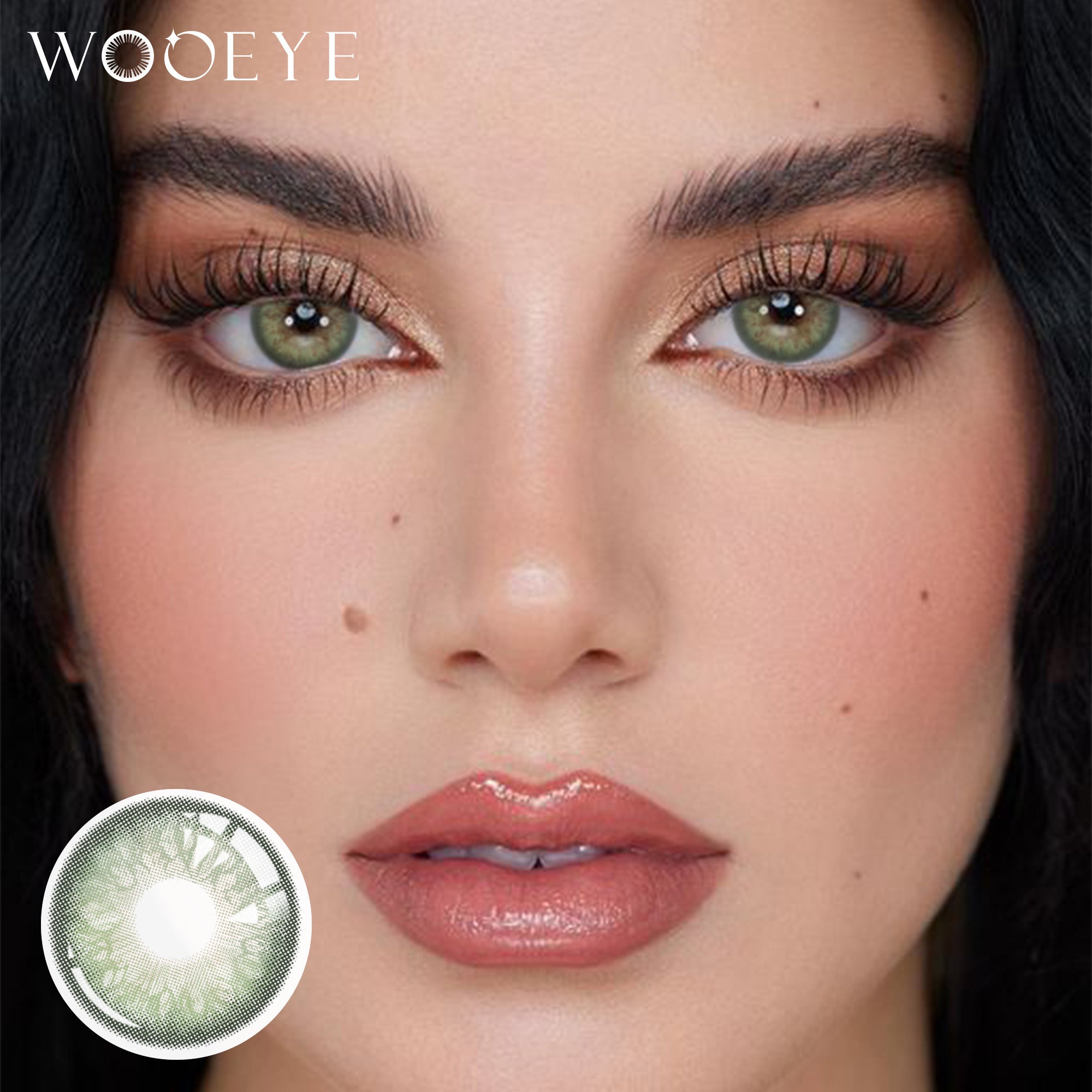
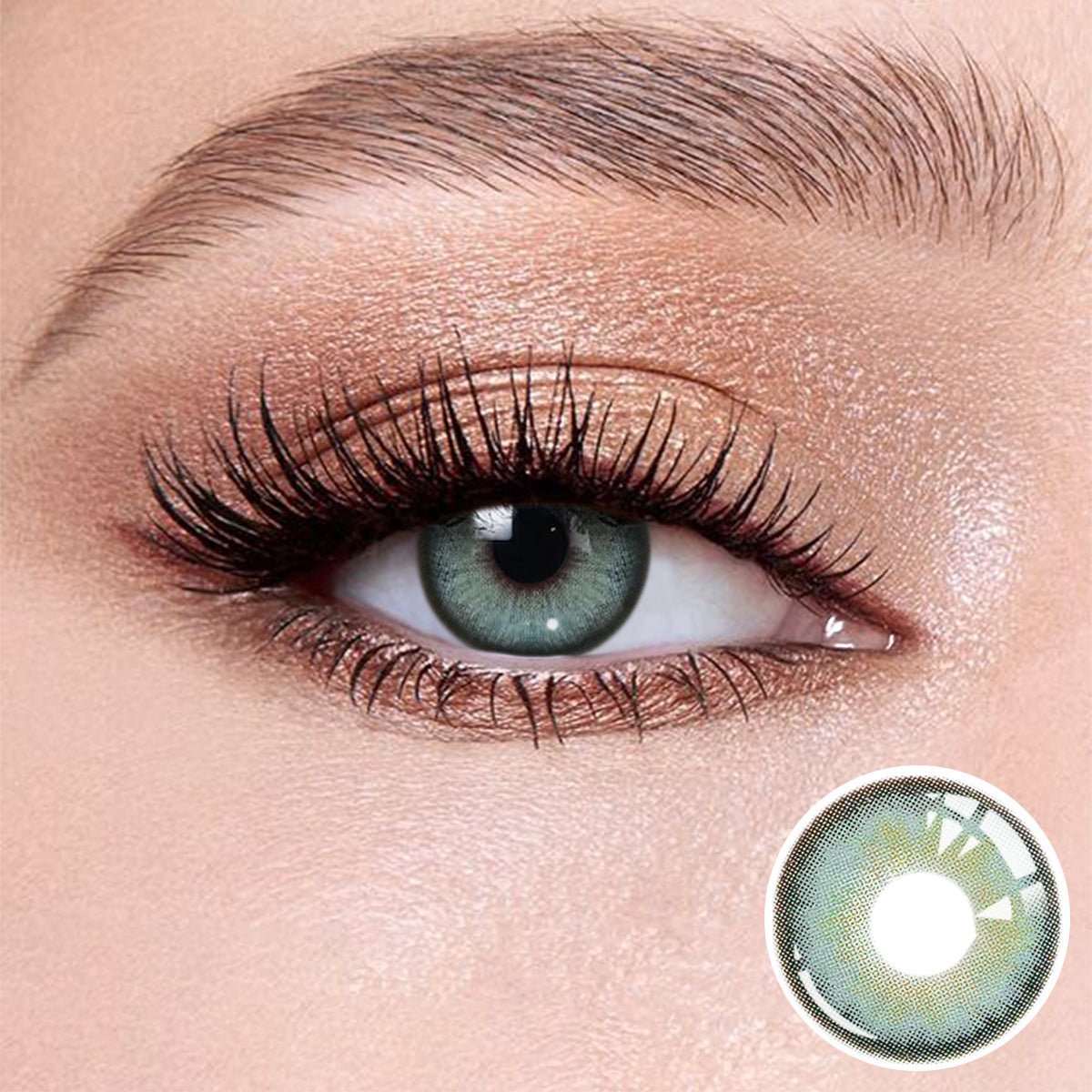
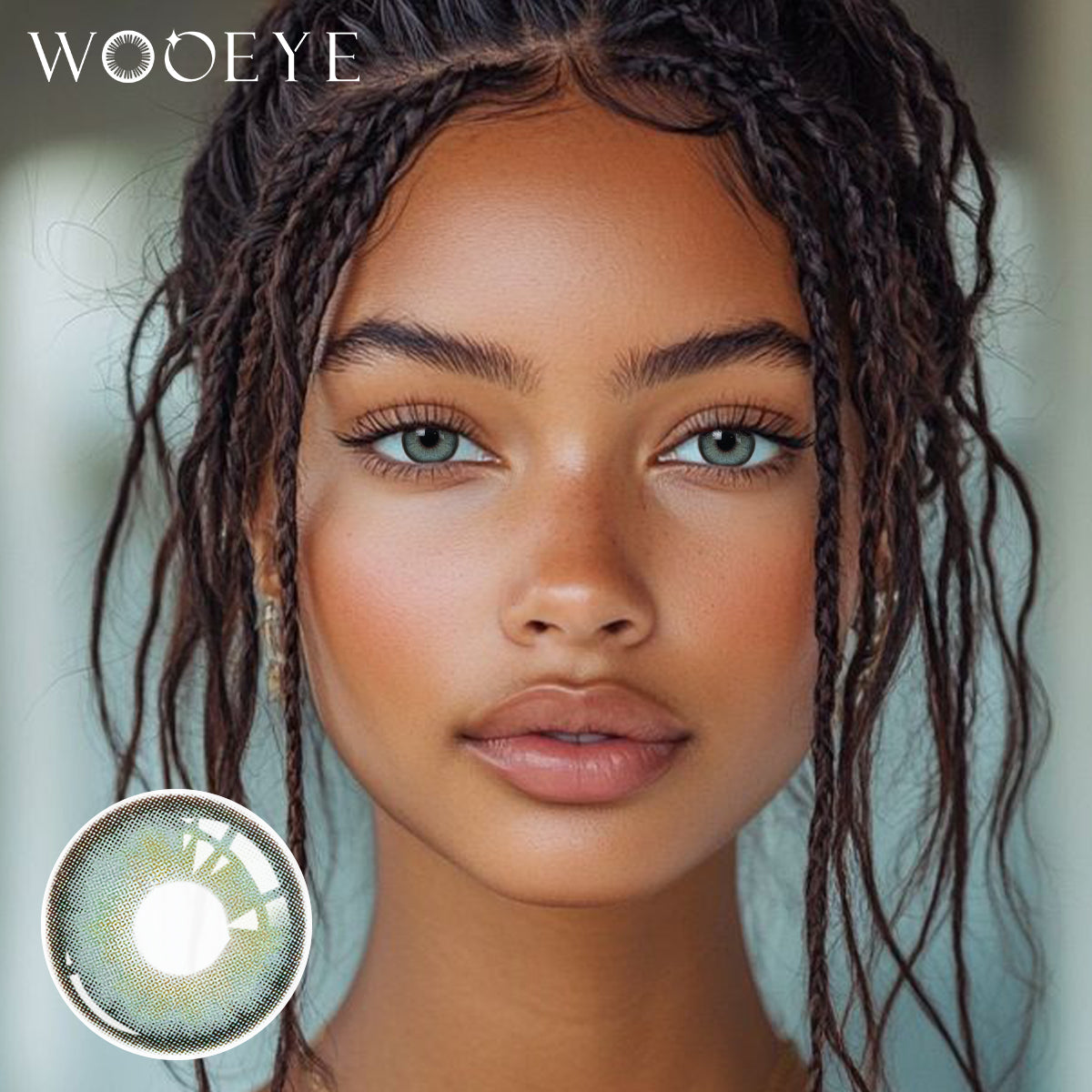
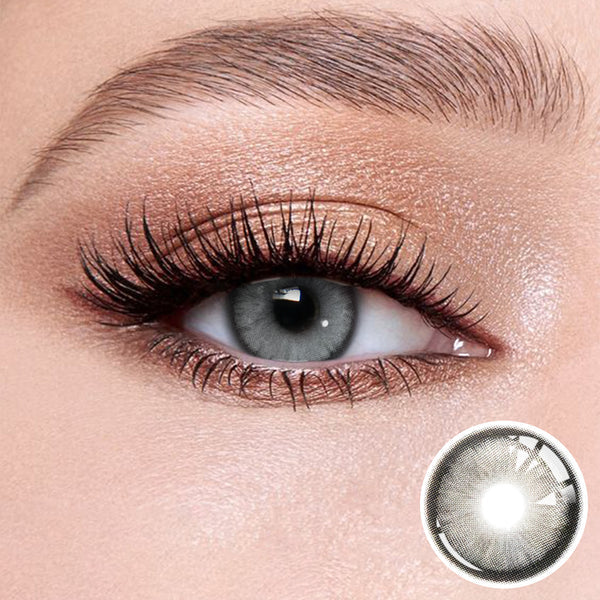
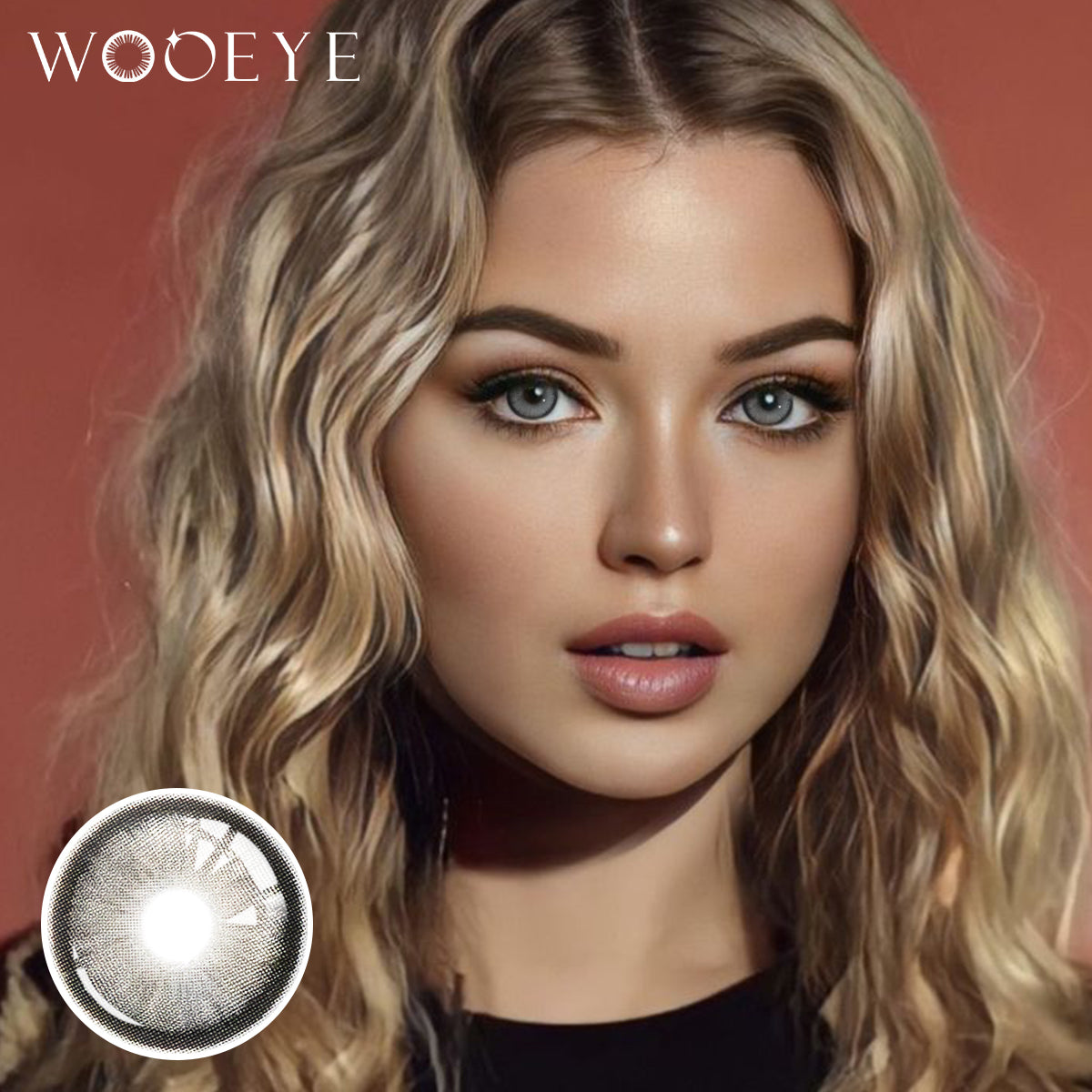
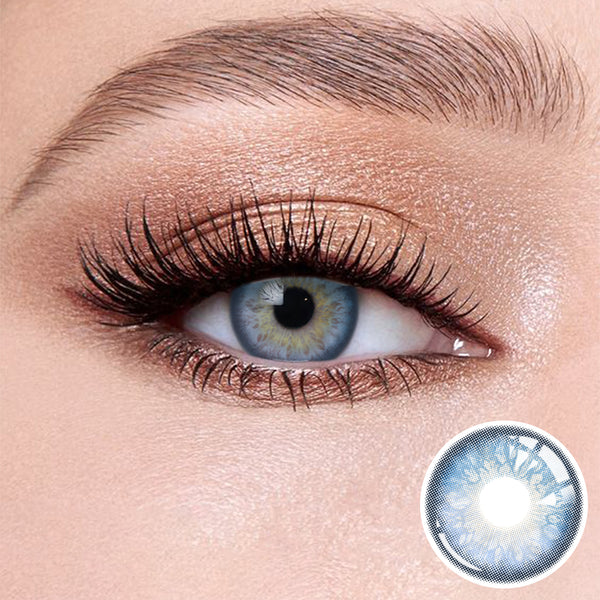
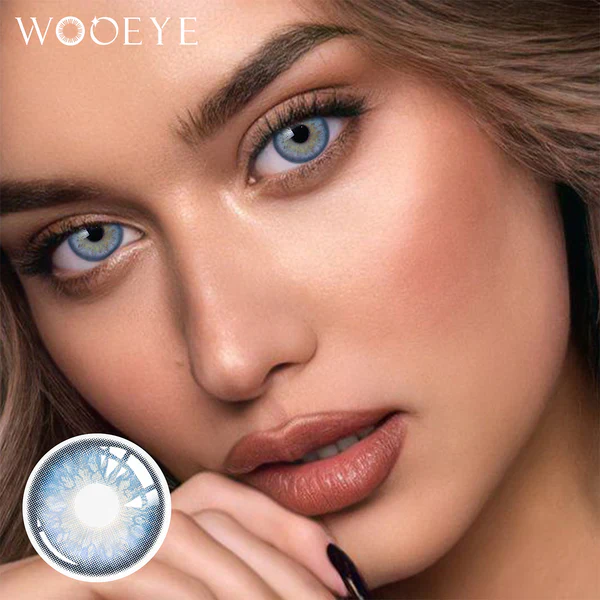
Colored pigments in contact lenses are designed to be isolated from direct contact with the eye’s surface through the lens construction, rather than simply being exposed as a layer on the outside of the lens. In many modern colored contact lenses, this is achieved through a layered or encapsulated construction such as sandwich technology.
However, pigment placement is only one part of contact lens safety. The material, manufacturing process, lens surface, oxygen flow, prescription, fit, and proper handling all matter.
Modern colored contact lenses are designed for comfort and safety.
For people who need vision correction, prescription lenses can combine vision correction with an eye-color change. Prescription colored contacts can correct vision while changing eye color.
Why Does Pigment Placement Matter in Colored Contacts?
A colored contact lens has two jobs:
- Change or enhance the appearance of the eye.
- Function as a contact lens that sits directly on the cornea.
That creates an important design challenge.
The pigment needs to create a realistic iris pattern while remaining enclosed within the lens structure.
A poorly designed lens may have pigment positioned too close to the outer surface, while a more advanced lens construction can place the pigment between transparent lens layers.
This is one reason colored contact lenses should not be evaluated by color alone.
How Is Color Added to Contact Lenses?
Manufacturers can create colored lenses using specialized pigments and controlled manufacturing processes.
The color design may include:
- Multiple pigment tones
- Radial iris patterns
- Gradient transitions
- A defined outer ring
- A transparent central pupil area
The goal is to reproduce the visual complexity of a natural iris rather than creating a completely flat block of color.
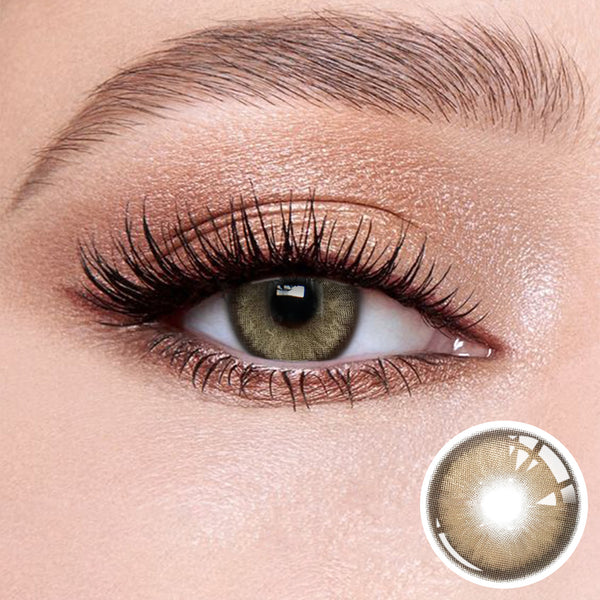
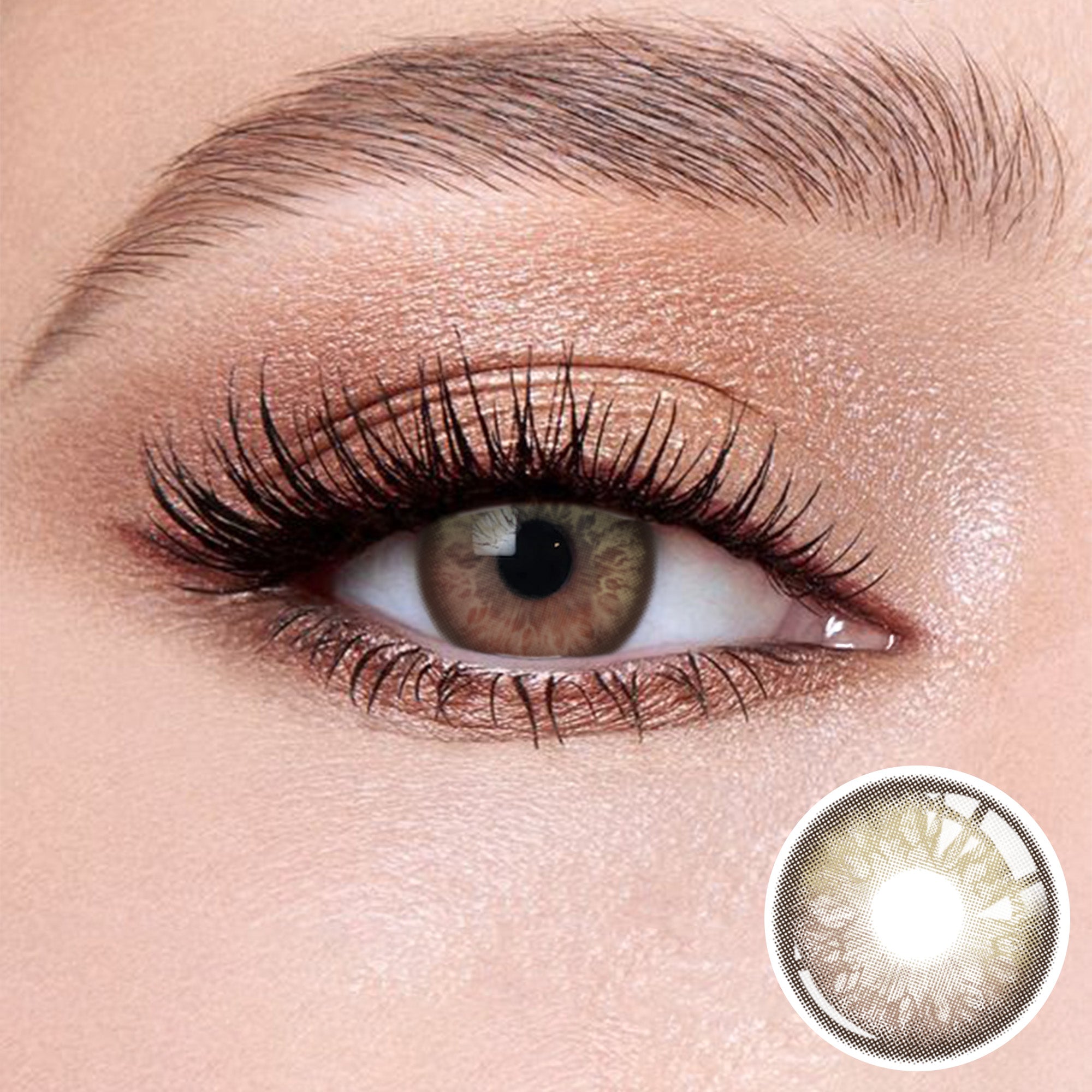
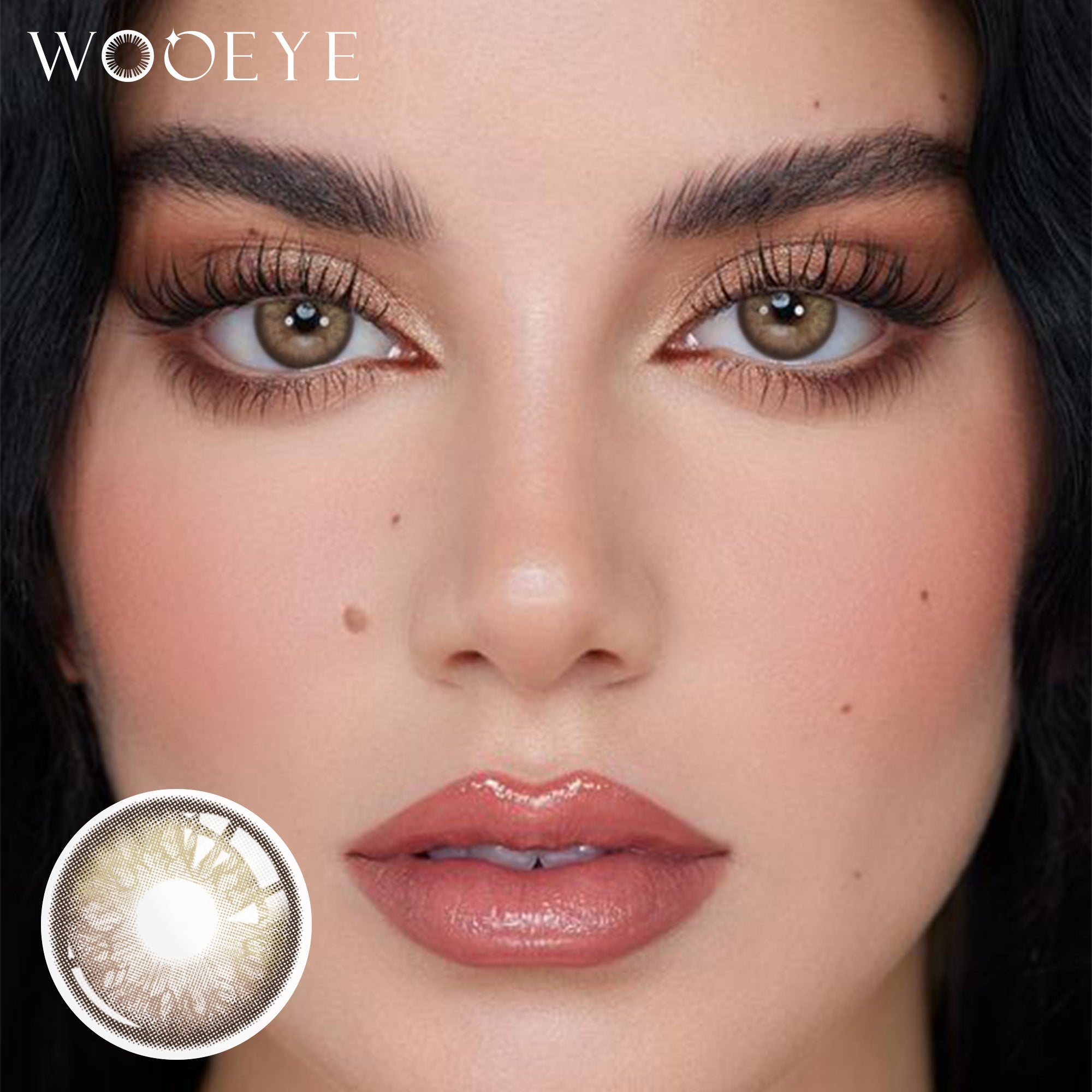
For example, a natural-looking brown lens may combine several shades of brown, amber, and darker details rather than using one solid brown pigment.
What Is Sandwich Technology?
One of the key technologies used in colored lens construction is sandwich technology.
Instead of leaving the pigment exposed directly on the lens surface, the pigment is positioned between layers of lens material.
Think of it like this: Transparent lens layer → Color pigment → Transparent lens layer
The pigment is therefore enclosed within the lens structure.
This construction is designed to:
- Keep the pigment enclosed
- Create a smoother external lens surface
- Produce detailed iris patterns
- Support a comfortable wearing experience
For colored contact lenses, this type of construction can help manufacturers combine visual design with lens functionality.
Does Sandwich Technology Make Colored Contacts Completely Safe?
No contact lens technology should be described as making a product “completely risk-free.”
Sandwich technology addresses pigment placement, but overall contact lens safety depends on many other factors including material quality, manufacturing controls, oxygen transmission, lens fit, prescription accuracy, storage, hygiene, wearing time, and replacement schedule.
A well-constructed lens still needs to be used correctly.
Material Science: HEMA Material and Oxygen Flow
HEMA Material
Many soft colored contact lenses use HEMA material, or Hydroxyethyl Methacrylate.
HEMA is a hydrogel material commonly used in soft contact lens manufacturing.
It can provide softness, flexibility, moisture retention, and natural lens movement.
WOOEYE uses HEMA material with approximately 40% water content in its colored contact lens designs.
However, the material itself is only one component of the finished lens. Manufacturing quality and the complete lens structure also matter.
Oxygen Flow
Your cornea needs oxygen from the surrounding environment.
A contact lens sits over the cornea, so the lens material and thickness influence how oxygen reaches the eye.
Material choice directly affects comfort and oxygen flow.
A good lens design needs to balance oxygen transmission, water content, material properties, lens thickness, and surface characteristics.
This is particularly relevant for people who wear colored contact lenses for several hours at a time.
What About Water Content?
Water content refers to the amount of water contained within the lens material.
WOOEYE colored lenses use approximately 40% water content.
A common misconception is that a higher water percentage automatically means a safer or more comfortable lens. That’s not necessarily true.
The overall wearing experience depends on the relationship between water content, material, oxygen flow, lens design, and fit.
Are the Pigments Safe for the Eyes?
The important issue isn’t simply whether a pigment is “safe” in isolation.
For a finished contact lens, manufacturers need to consider how the color component interacts with the lens structure.
A properly designed colored lens should have the pigment integrated into the lens construction rather than treating pigment like ordinary makeup applied directly to the eye.
This distinction is important because colored contact lenses are medical devices, not eye makeup.
That’s also why buying from a transparent and reputable source matters.
Can Colored Pigments Cause Eye Irritation?
Eye irritation can have many causes, and pigment is not necessarily the cause.
Potential reasons include poor lens fit, dirty lenses, excessive wearing time, dry eyes, damaged lenses, incorrect prescription, poor storage, and individual sensitivity.
If your eyes become significantly red, painful, unusually sensitive to light, or your vision changes, remove the lenses and seek professional eye care.
Don’t assume that discomfort is simply part of wearing colored contacts.
Prescription Colored Contacts and Pigment Design
Prescription colored contacts can correct vision while changing eye color.
For people with myopia, prescription lenses provide vision correction while allowing the user to choose a cosmetic color.
However, prescription power isn’t the only consideration. A properly fitted lens also needs to account for base curve, diameter, lens movement, individual eye shape, and wearing schedule.
WOOEYE offers prescription colored contacts for myopia up to -8.00 diopters, giving stronger-prescription users more options for combining vision correction and eye color.
See Clearly. Look Great.
Shop Prescription Colored Contacts
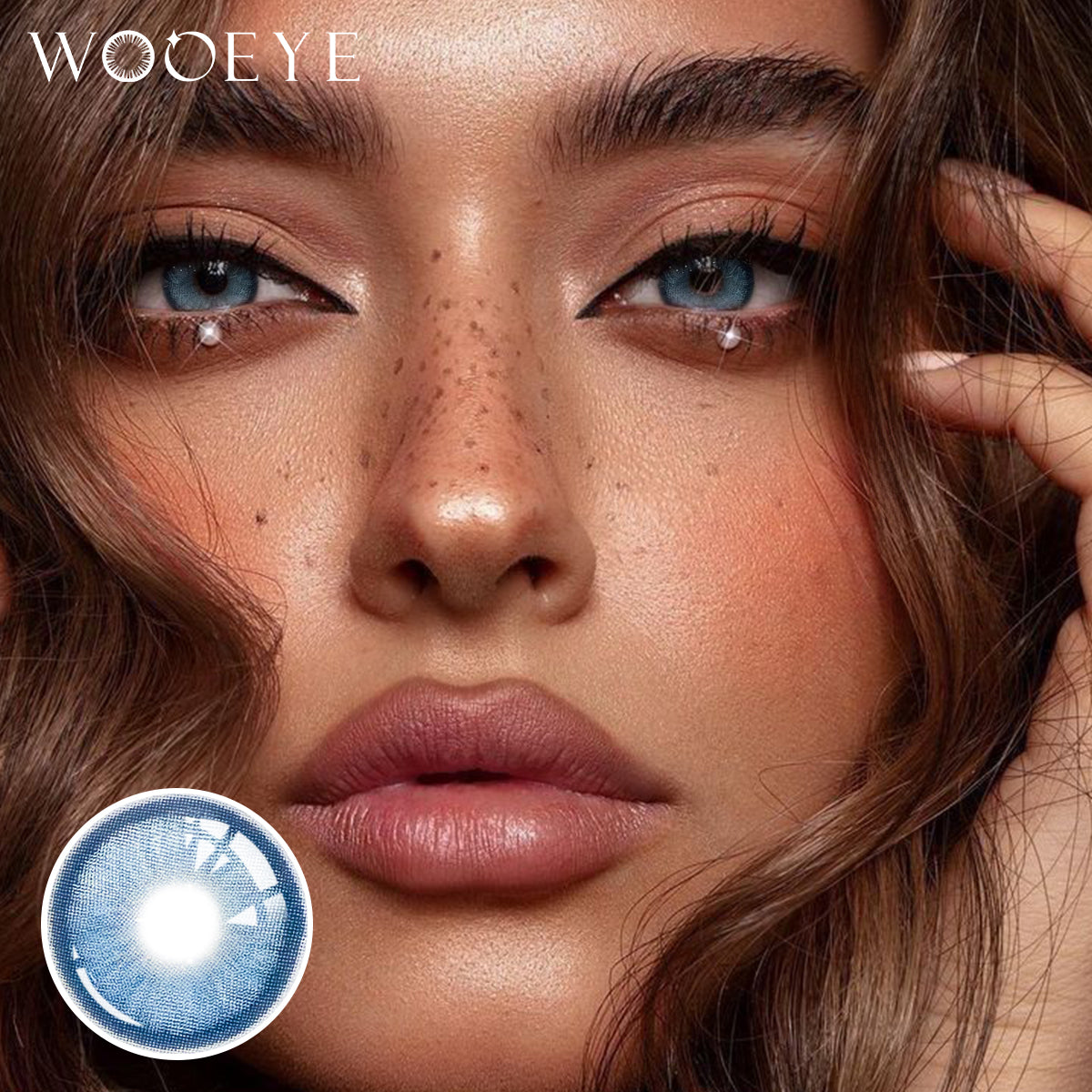
Vision correction up to -8.00 — available in brown, gray, blue, green, and more.
Shop Prescription Contacts →Why Natural Iris Patterns Matter
The most realistic colored contact lenses don’t usually look like a flat circle of paint.
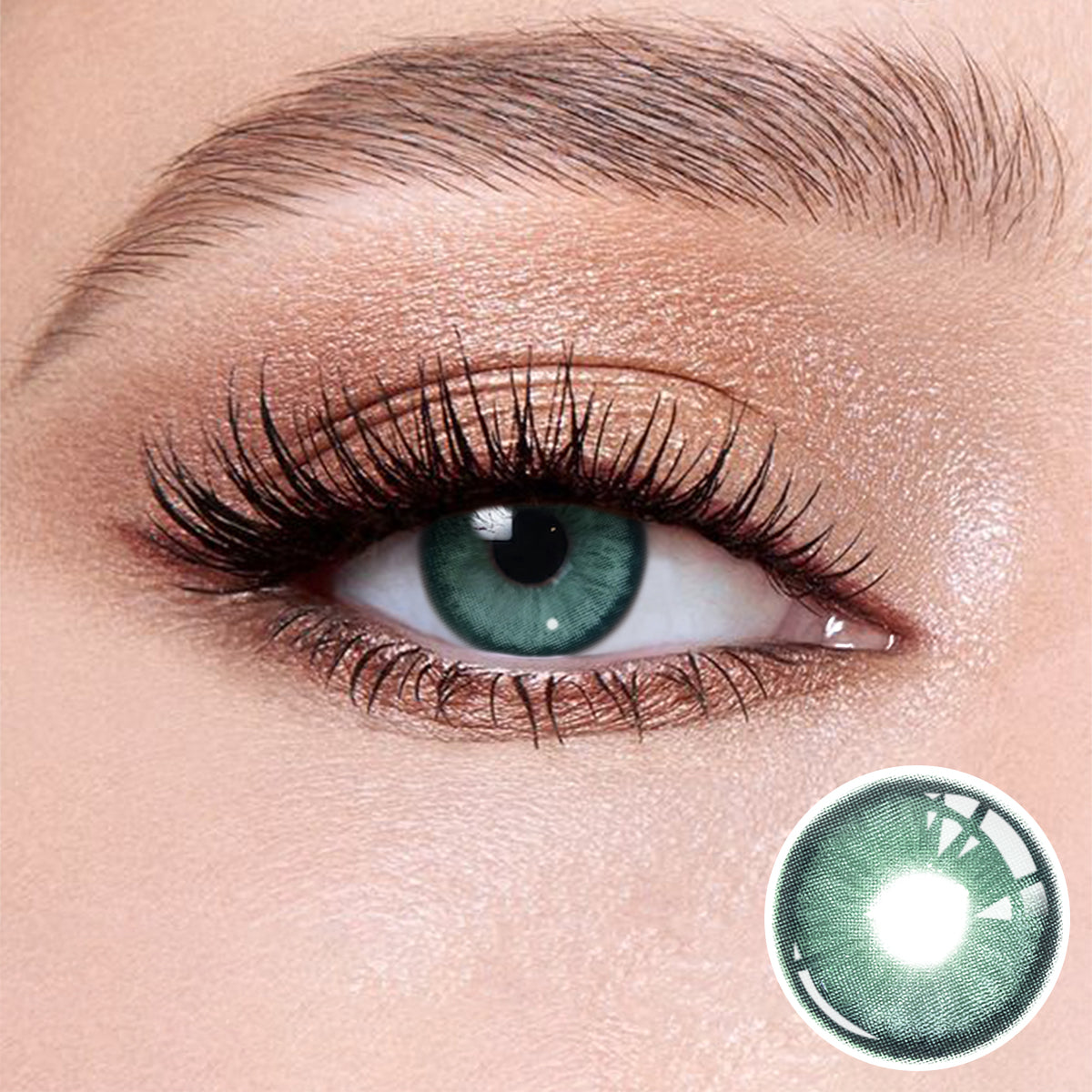
A natural iris contains darker areas around the pupil, radial fibers, multiple tones, gradual color transitions, and different levels of opacity.
Premium color design attempts to reproduce some of these details.
This becomes particularly noticeable in bright sunlight or close-up photography.
A well-designed brown lens, for example, may contain several brown and amber tones instead of one uniform color.
NYC Lifestyle: When Your Contacts Become Part of Your Look
New York is a city where your look can change several times in one day.
Maybe you’re wearing a simple blazer for work in the morning, grabbing lunch downtown, then heading to a gallery opening or dinner later.
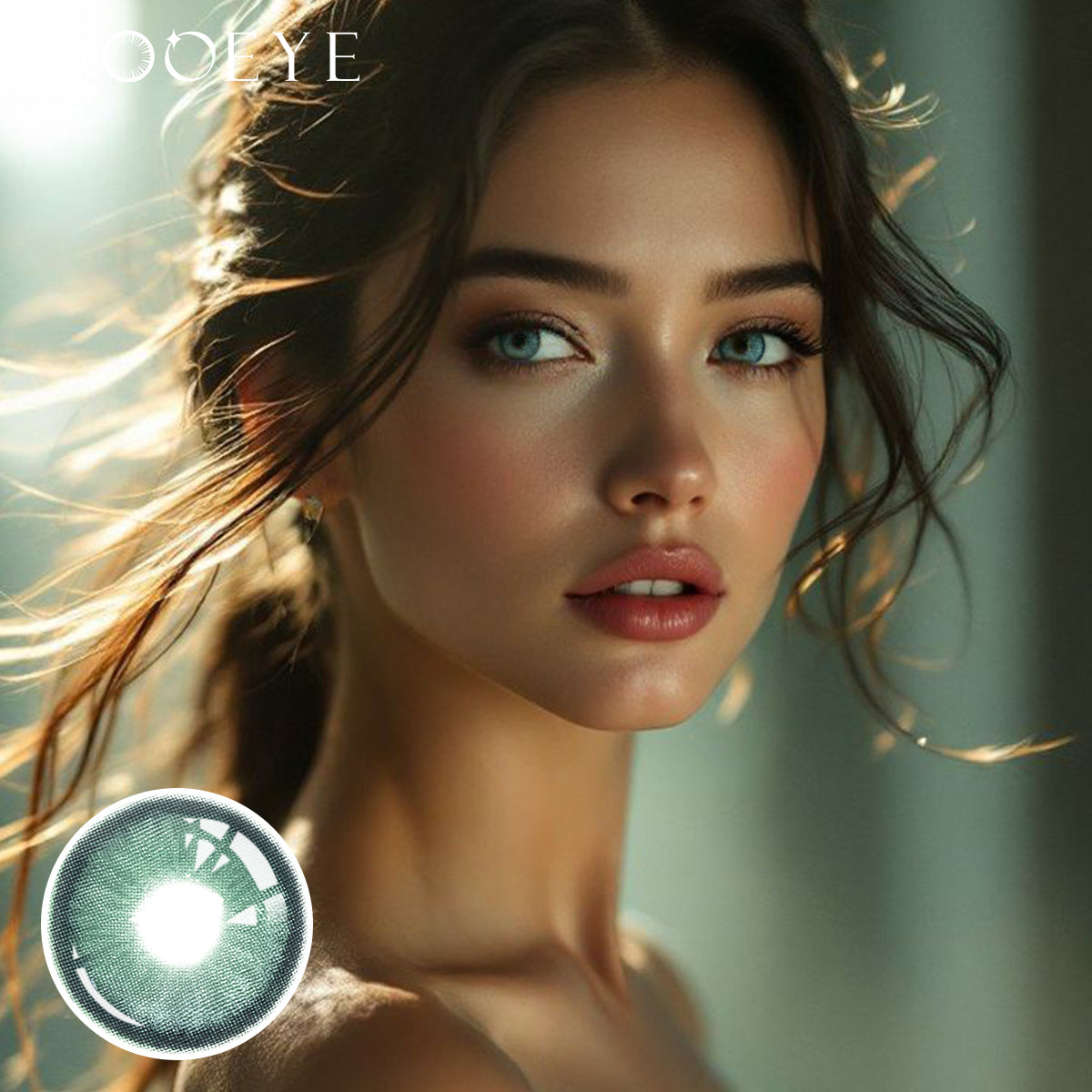
Colored contacts can be a subtle way to change your look without changing your entire makeup routine.
Brown
Warm and understated for everyday wear.
Hazel
Adds a little more dimension while staying natural.
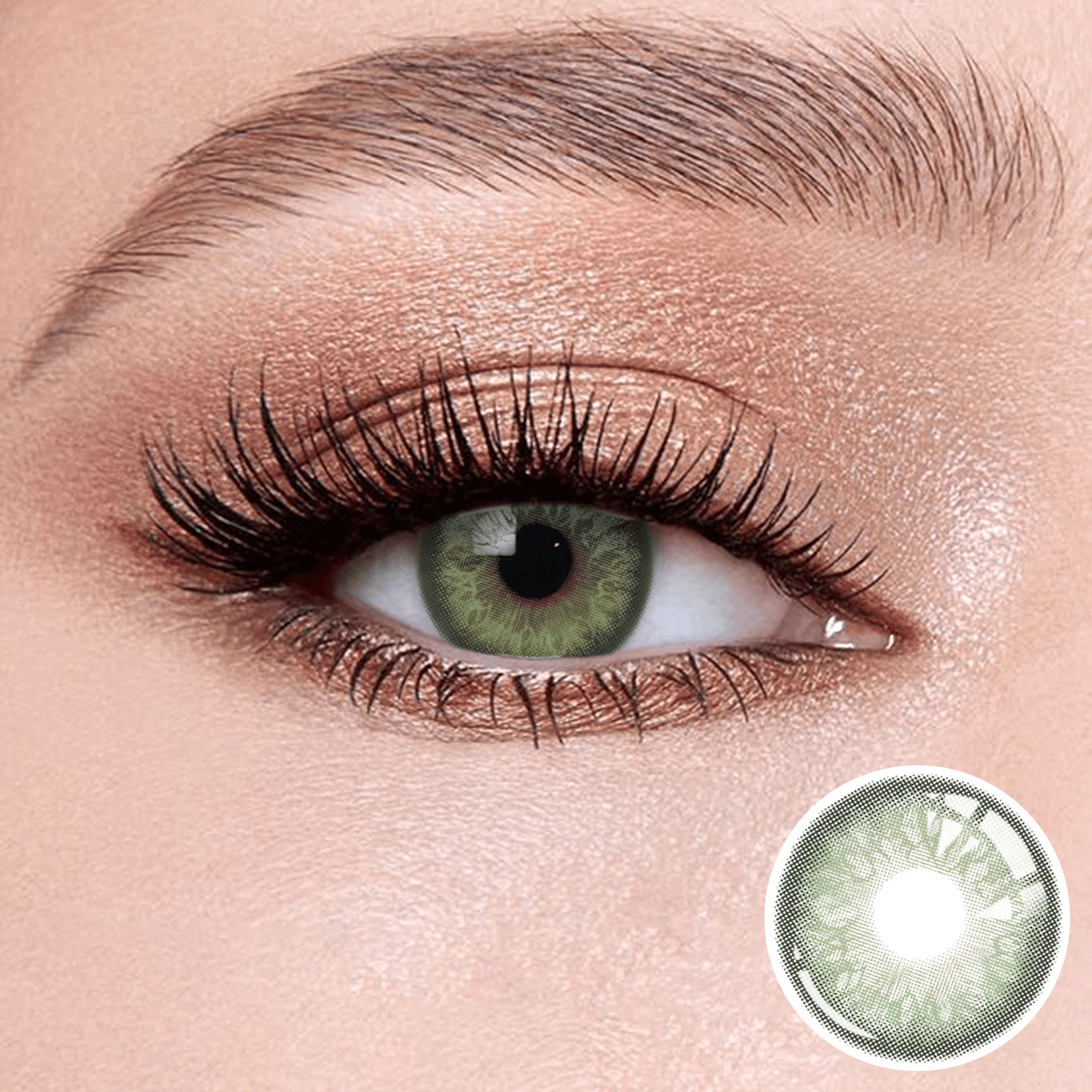
Olive
Works well when you want something slightly different.
Gray
Creates a cooler, more fashion-forward look.
In bright NYC daylight, multi-tone iris patterns can become especially noticeable.
How to Choose Safer Colored Contacts
Before purchasing colored contact lenses, look beyond the color photo.
Check the Material
Does the brand clearly state whether it uses HEMA material or another lens material?
Check the Construction
Does the brand explain how the pigment is incorporated into the lens?
Check Prescription Options
If you need vision correction, look for appropriate prescription lenses.
Check Product Information
Look for clear information about lens specifications, wearing instructions, replacement schedule, storage, and customer support.
Don’t Ignore Your Eyes
If contacts cause persistent discomfort, redness, pain, or vision changes, stop wearing them and seek professional advice.
A Note About WOOEYE
WOOEYE focuses on comfort + natural + safe + prescription-ready colored contacts.
Its colored contact lenses use HEMA material, approximately 40% water content, and sandwich technology, with the pigment enclosed within the lens structure.
WOOEYE also provides prescription lenses for myopia up to -8.00 diopters, allowing users to combine vision correction with different eye-color styles.
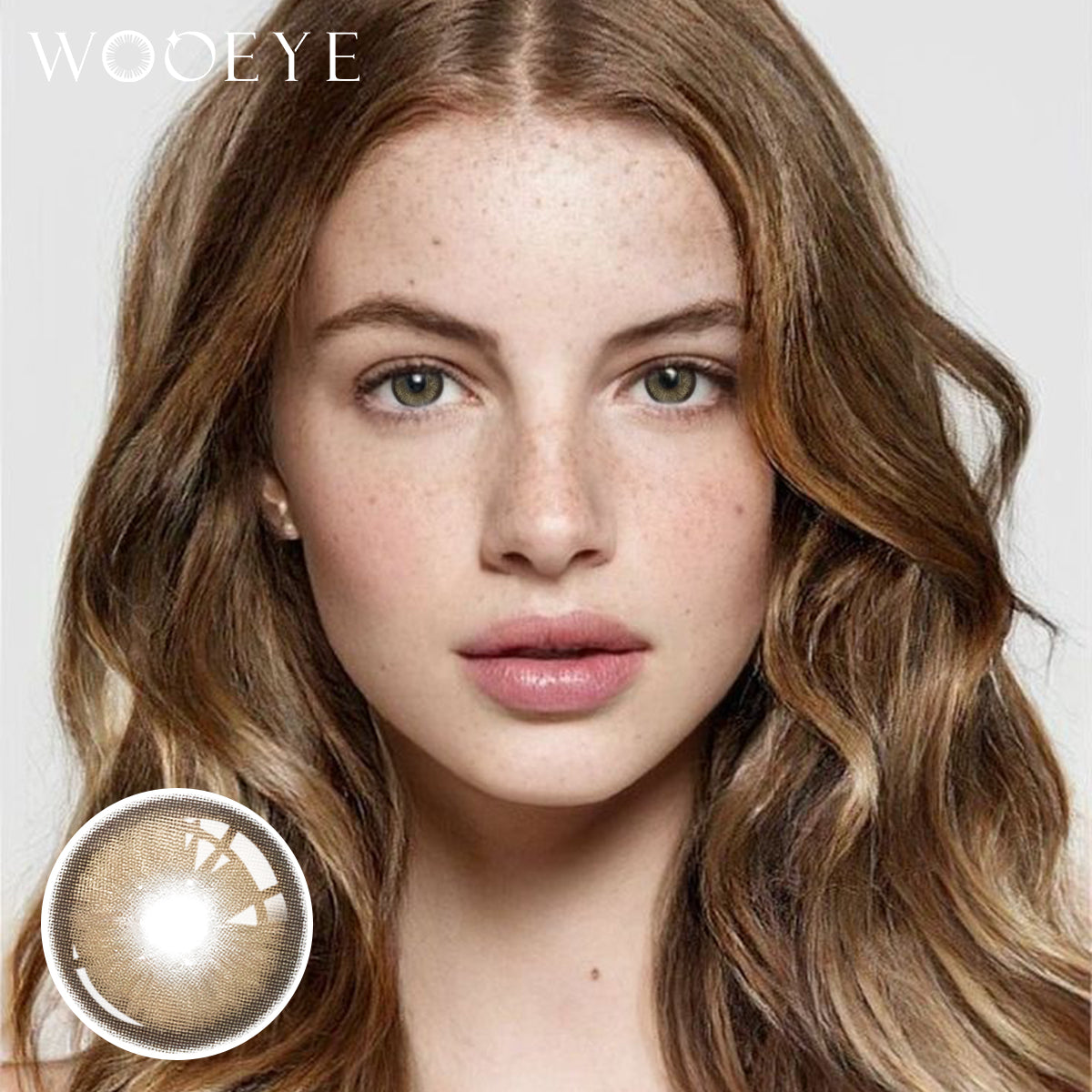
For anyone exploring a new shade, try WOOEYE brown colored contacts for a warm, everyday look.
FAQ: Colored Pigments in Contact Lenses
Is the color painted directly onto the contact lens?
It depends on the manufacturing technology. Some modern colored contact lenses use layered constructions such as sandwich technology, which encloses the pigment between lens layers.
Can colored contact lenses damage your eyes?
Contact lenses can cause eye problems when they are poorly fitted, contaminated, damaged, worn incorrectly, or not properly cared for. Pigment placement is only one aspect of lens safety.
Are colored contacts safe for everyday wear?
That depends on the specific lens, its approved wearing schedule, your eyes, and how you use and care for it. Follow the manufacturer’s instructions and your eye-care professional’s advice.
Can I get colored contacts with my prescription?
Yes. Prescription lenses can be manufactured with color in many product ranges. WOOEYE offers prescription colored contacts up to -8.00 diopters.
Final Takeaway
Colored pigments in contact lenses are made safer through controlled manufacturing and lens construction, including technologies such as sandwich technology that encloses the pigment within the lens structure.
But pigment encapsulation is only one piece of the equation.
A quality colored contact lens also needs appropriate HEMA material, oxygen flow, water balance, lens design, prescription, fit, and manufacturing controls.
Modern colored contact lenses are designed for comfort and safety.
The smartest way to evaluate a colored lens is to look at the entire product — not just how vibrant the color looks in the product photo.